
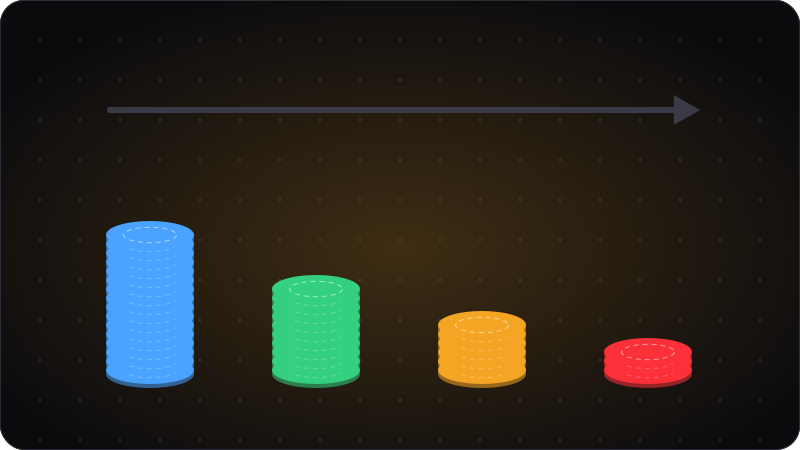
Tournament poker is not one game. It is several different games played under the same blind timer.
At the start, you have depth. In the middle, antes and shrinking stacks change the math. Near the bubble, survival pressure warps ranges. In the money, laddering starts to matter. At the final table, ICM can matter more than chip EV in close spots.
If you play MTTs well, you do not ask, “What is the best hand here?” first. You ask, “What stage am I in, how deep are the stacks, and what is the cost of a mistake right now?”
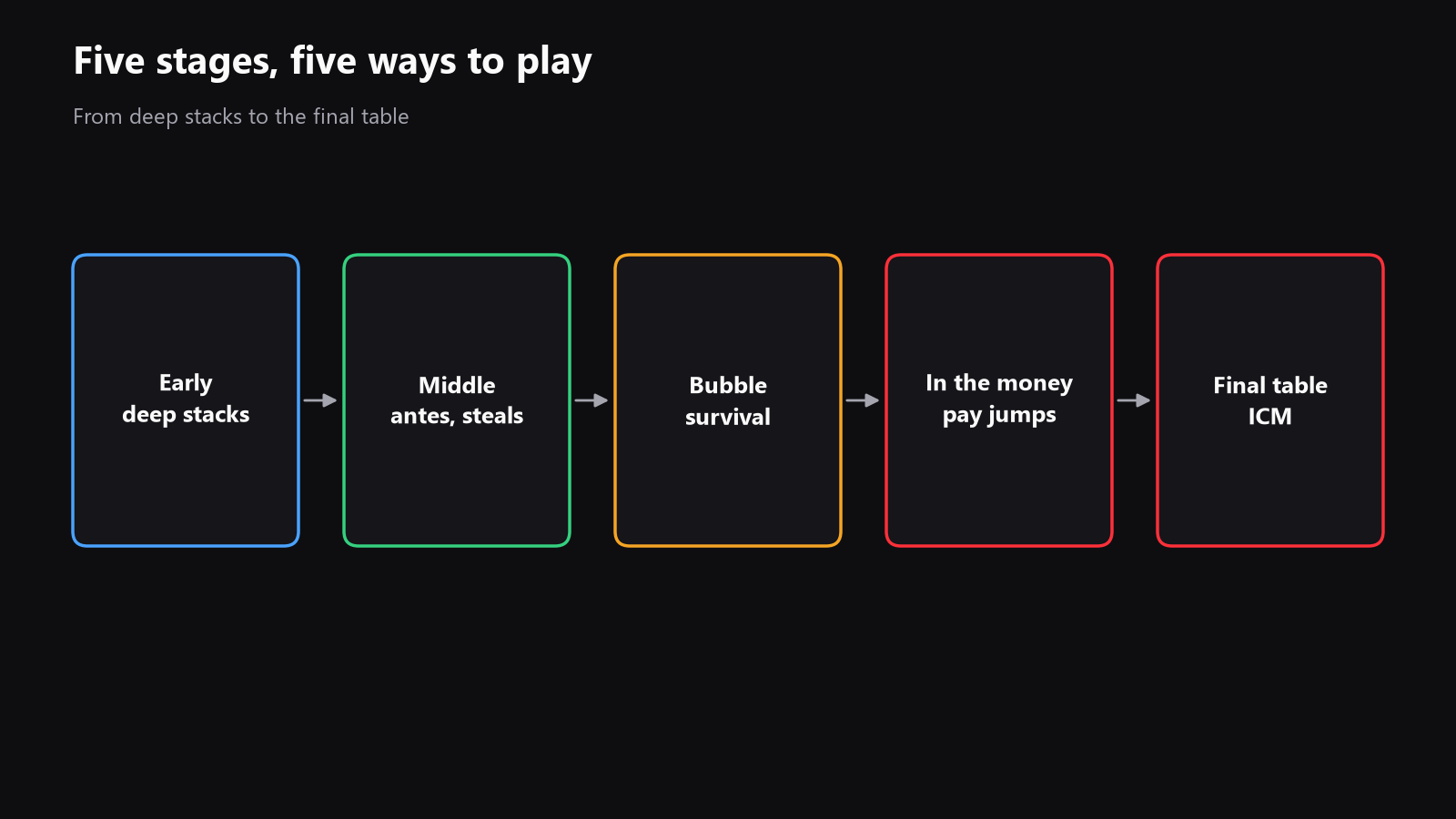
The big idea: each stage changes the value of chips
A chip is not always worth the same thing.
- Early on, chips mainly buy future options.
- As stacks shrink, one mistake costs a larger share of your tournament life.
- Near the bubble and final table, prize jumps create pressure that pure chip counting cannot capture.
That is why the same hand can be a clear call in one stage and a clear fold in another.
Here is the simplest way to think about it:
| Stage | Main pressure | What goes up in value | What goes down in value |
|---|---|---|---|
| Early levels | Deep stacks, low blind pressure | Postflop skill, implied odds, position | Marginal bluffing, big pots without a plan |
| Middle stages | Antes, shorter stacks | Steals, resteals, efficient stack pressure | Loose calls out of position |
| Bubble | Survival and pay jump pressure | Fold equity, stack leverage | Thin calls, coin-flip gambles without reason |
| In the money | Laddering and stack preservation | Well-chosen aggression, chip accumulation | Marginal bust-out spots |
| Final table | ICM and pay jumps | Pressure on medium stacks, selective aggression | Light calls for your tournament life |
1. Early levels: deep stacks reward patience and postflop skill
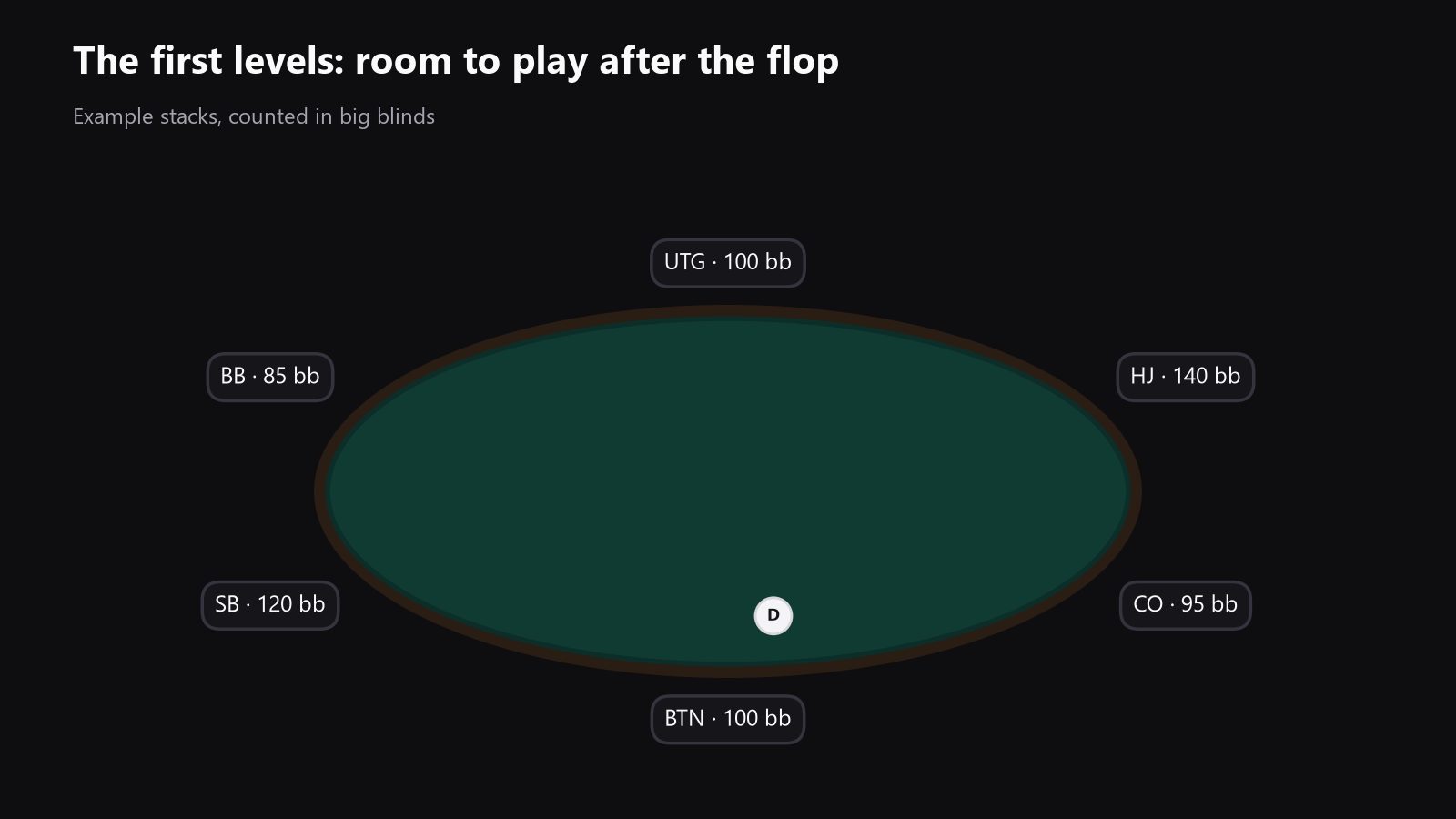
At the start of a tournament, stacks are usually deep relative to the blinds. That means the pot you are fighting for is small compared with the stack behind.
In this phase:
- Position matters a lot.
- Speculative hands gain value, especially when you can win a big pot if you hit.
- You should avoid inflating pots with weak one-pair hands unless the texture and opponent make it profitable.
- Bluffing is not gone, but it needs a credible story, because people can still continue with real depth behind.
Early levels are not about collecting blinds at any cost. They are about building pots when you have a real edge, and avoiding expensive mistakes when you do not.
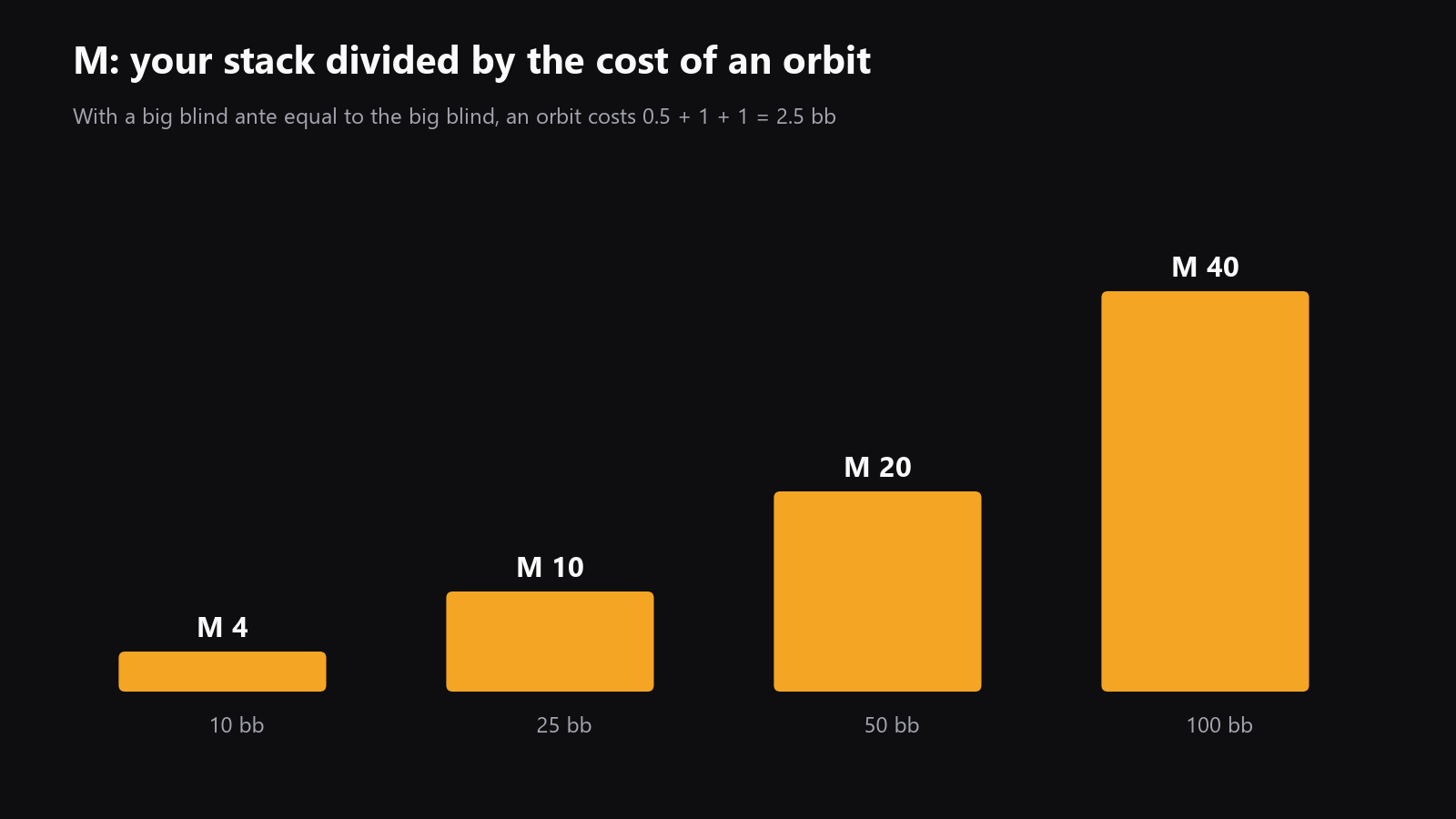
If the tournament uses a big blind ante equal to the big blind, one orbit costs 2.5 big blinds. That is a useful way to think about stack pressure:
- 25 bb = M 10
- 50 bb = M 20
- 100 bb = M 40
So even what looks like a big stack in big blinds can shrink faster than you expect once antes are in play.
2. Middle stages: antes turn up the heat
Once antes arrive, dead money increases and blind stealing becomes more valuable.
That changes your strategy in several ways:
- Opens from late position gain value.
- Hands that play well as steals or resteals rise in importance.
- Calling too wide becomes costlier, especially out of position.
- Stack depth starts to matter more than pure hand strength.
This is the stage where many players keep playing “as if” they were still deep, even though they are not. That is a mistake.
When stacks are no longer deep, you do not want to chase every medium-strength hand. You want to ask whether the hand can win chips immediately, realize equity efficiently, or build a pot where your stack depth still supports it.
A practical example:
- In early levels, a suited connector can be a comfortable call in position because the implied odds are good.
- In the middle stages, the same call can become too expensive if stacks are no longer deep enough to justify the risk.
That is also where M becomes a useful shortcut. If the big blind ante equals the big blind, your stack in M is your stack in big blinds divided by 2.5. A 25 bb stack is an M of 10. That is not a comfortable “deep” stack anymore.
3. The bubble: pressure is no longer equal for everyone
The bubble is where tournament poker becomes psychological and mathematical at the same time.
Why it matters:
- Busting before the money is painful.
- Many players tighten up because they fear missing the payout.
- Short stacks are trapped between waiting and risking their tournament life.
- Big stacks can attack more often because their opponents care more about survival.
This is where fold equity grows. Players do not defend their blinds, call off, or take thin edges at the same frequency as they would earlier.
Your adjustment depends on your stack:
If you are a big stack
You should pressure the stacks that cannot comfortably call you. Medium stacks are especially sensitive, because they have enough chips to care and not enough chips to ignore you.
If you are a medium stack
You need discipline. This is not the time for heroic calls just because a hand looks pretty. If busting costs you a guaranteed cash, the bar for gambling rises.
If you are a short stack
You still need action, but not panic. The bubble is often where a short stack can pick up the most fold equity, because everyone else is trying not to bust first.
This is where many players make their biggest mistake: they treat bubble spots as if chip EV is the only thing that matters. It is not. Survival has a real price.
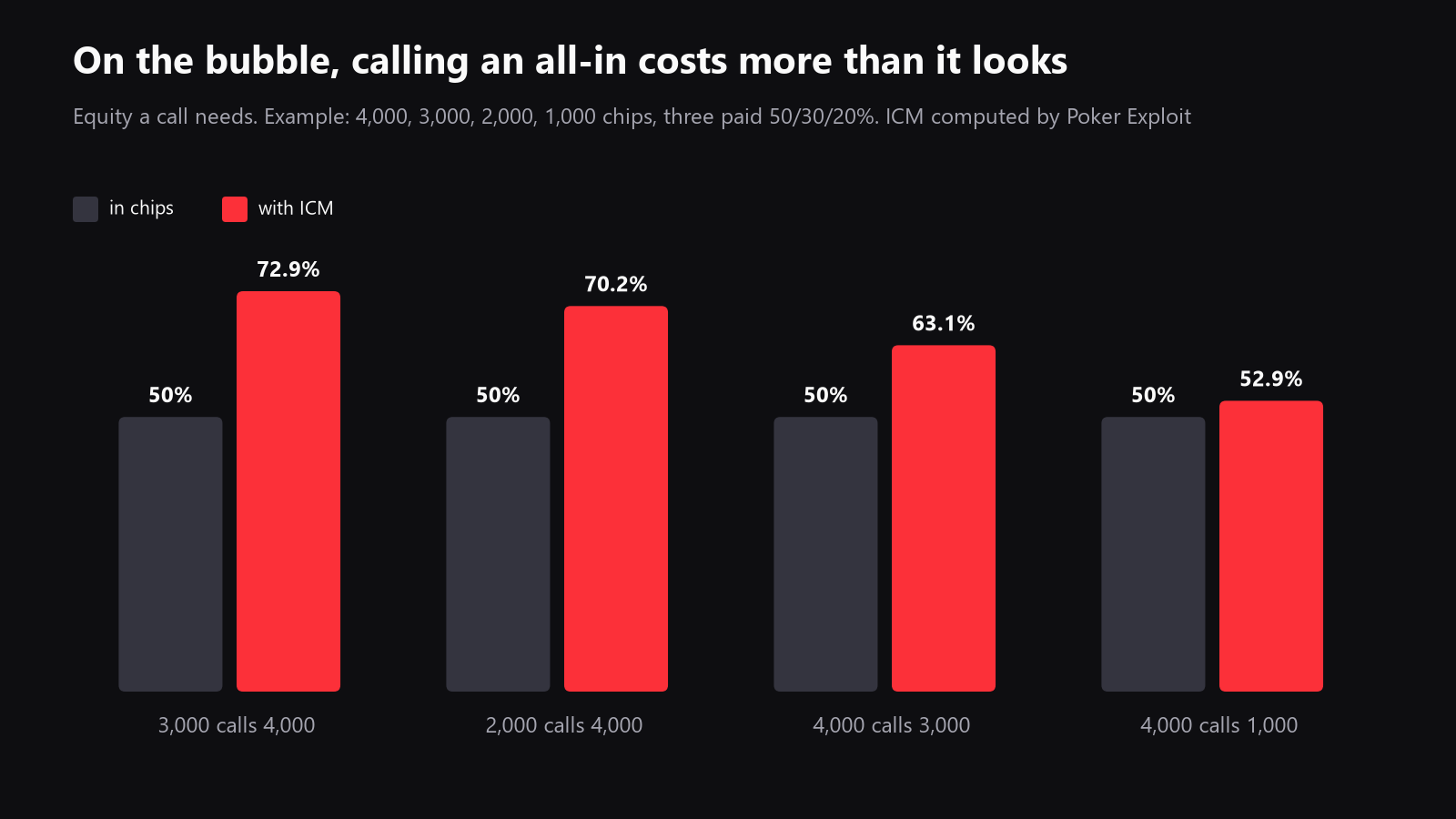
If you want to study this stage away from the table, the Reveal module shows what players at your limits actually do in tournament spots too, including bubble situations. That matters because theory tells you what should happen, but your pool tells you what does happen.
4. In the money: the first cash changes behavior
Once you are in the money, the entire table often loosens up.
That does not mean the tournament has become simple. It means the fear of missing the payout has been replaced by a new fear: missing the next ladder.
A few things usually happen:
- Some players breathe out and start gambling too freely.
- Others become overly careful and stop applying pressure.
- Medium stacks often become the quietest group at the table, because they have the most to lose from a bad call and not enough chips to bully everyone.
Your job is to separate good aggression from emotional aggression.
In the money, you still want to build stacks. But you should be aware that every chip is serving two masters:
- chip EV
- payout EV
The deeper the remaining payout jumps, the more careful you must be with close calls.
This is why a good tournament player does not say, “I am in the money, so I can relax.” A good player says, “I am in the money, so I need to know which spots are worth the risk.”
5. The final table: ICM changes the whole conversation
At the final table, chips are no longer just chips.
The Independent Chip Model, or ICM, estimates each stack’s share of the prize pool from stack sizes alone. It ignores skill, position, and blind dynamics. That is why it is an approximation, not a perfect truth. But it is good enough to change your strategy in many close spots.
At a final table:
- Losing chips hurts more than winning the same amount helps.
- Medium stacks are under the most pressure.
- Big stacks can use that pressure to attack.
- Short stacks have to pick their push spots carefully.
This is where many players overcall. They see a hand that would be fine in chip EV and forget that busting now costs real payout equity.
So what changes in practice?
- You should call tighter when elimination risk is expensive.
- You should shove and pressure more carefully, not mindlessly wider.
- You should pay attention to who covers whom.
- You should think about laddering, not just pot size.
That is why final table strategy is often less about “playing more hands” and more about choosing the right hands to pressure the right stacks.
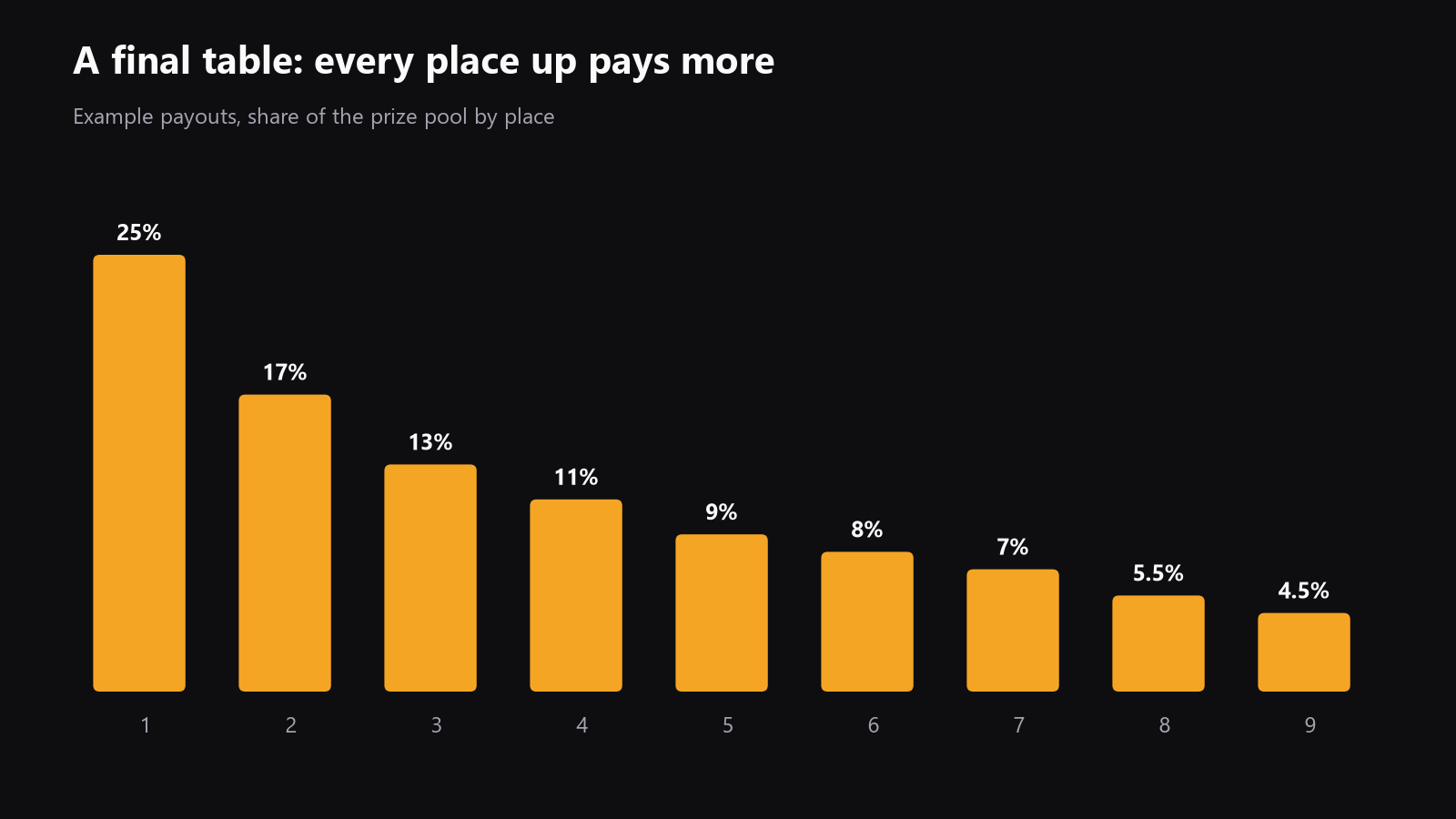
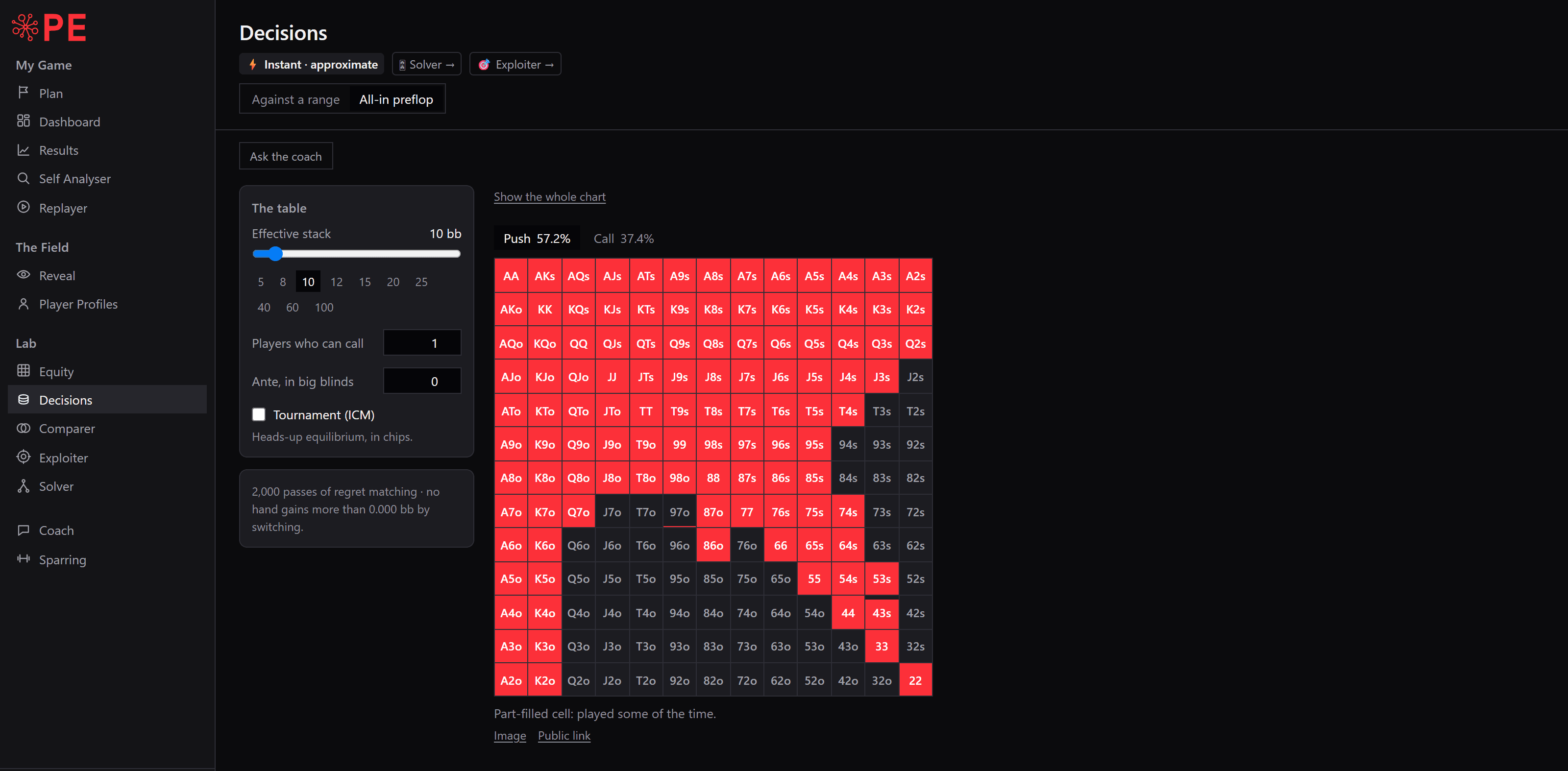
If you want a practical way to study these endgame spots, the Decisions module gives push, fold, or call answers for short-stack situations, and it gives push/fold charts in chips. Just remember the model is for when everyone before has folded, and with several players still to act it understates how often a shove gets called. The Exploiter also includes ICM, which helps when you want to study the best answer against an opponent’s tendencies in tournament spots.
A simple stage-by-stage checklist
Before you act in a tournament hand, ask yourself:
- How deep are the stacks in big blinds?
- Are antes in play?
- Am I near a bubble or a big pay jump?
- Who covers whom?
- Is this a chip EV spot, an ICM spot, or both?
- Would this hand still be good if the same situation happened one stage earlier or later?
That last question is important. A lot of tournament mistakes come from using the right logic in the wrong stage.
What to remember
- Early levels reward patience, position, and postflop skill.
- Middle stages reward stealing, pressure, and stack-aware aggression.
- The bubble rewards fold equity and punishes careless calls.
- The money rewards controlled aggression, not panic.
- The final table rewards ICM awareness and stack leverage.
If you want to improve quickly, do not study “tournament poker” as one block. Study it as a sequence of separate games. That is where the real edge starts.
And if you want to review your own tournament leaks off the table, the Results screen shows ROI and ITM over your career, the Plan module and the Dashboard's What to work on help you find which situations cost you the most, and the Reveal module shows what real players at your limits do in tournament spots.
Do it on your own hands.