
If you want to beat poker, you cannot treat every opponent the same.
A recreational player, or fish, is often the easiest source of profit at the table, not because they always make one huge mistake, but because they repeat small mistakes over and over. They call too much, fold too little in the wrong spots, limp when they should raise, and pay off hands that should be losing money.
That is good news for you. Against recreational players, you do not need a complicated strategy. You need a simple one that does three things well: spot them quickly, get them into big pots when you have the edge, and stop trying to win money with fancy bluffs that do not work.
What a recreational player looks like
A fish is not just “a bad player.”
In practice, recreational players usually have a cluster of tendencies:
- They play too many hands preflop.
- They limp too much, or call instead of raising.
- They cold-call raises with hands that should be folded.
- They 3-bet too little, or 3-bet in a very linear, obvious way.
- They call down with one pair far too often.
- They do not adjust much to your sizings.
- They often play face up, even if they do not mean to.
That is why the HUD panel is useful. It shows observed statistics, not advice, and these six are enough to build a first read: VPIP, PFR, 3-bet, fold to 3-bet, flop c-bet, and fold to flop c-bet.
Those six numbers do not tell the whole story, but they tell you a lot. A player with a high VPIP and a much lower PFR is entering too many pots by calling. A player who folds too much to 3-bets is giving you immediate preflop profit. A player who rarely folds to flop c-bets is probably not the one you want to bluff at all day.
Why recreational players are where the money comes from
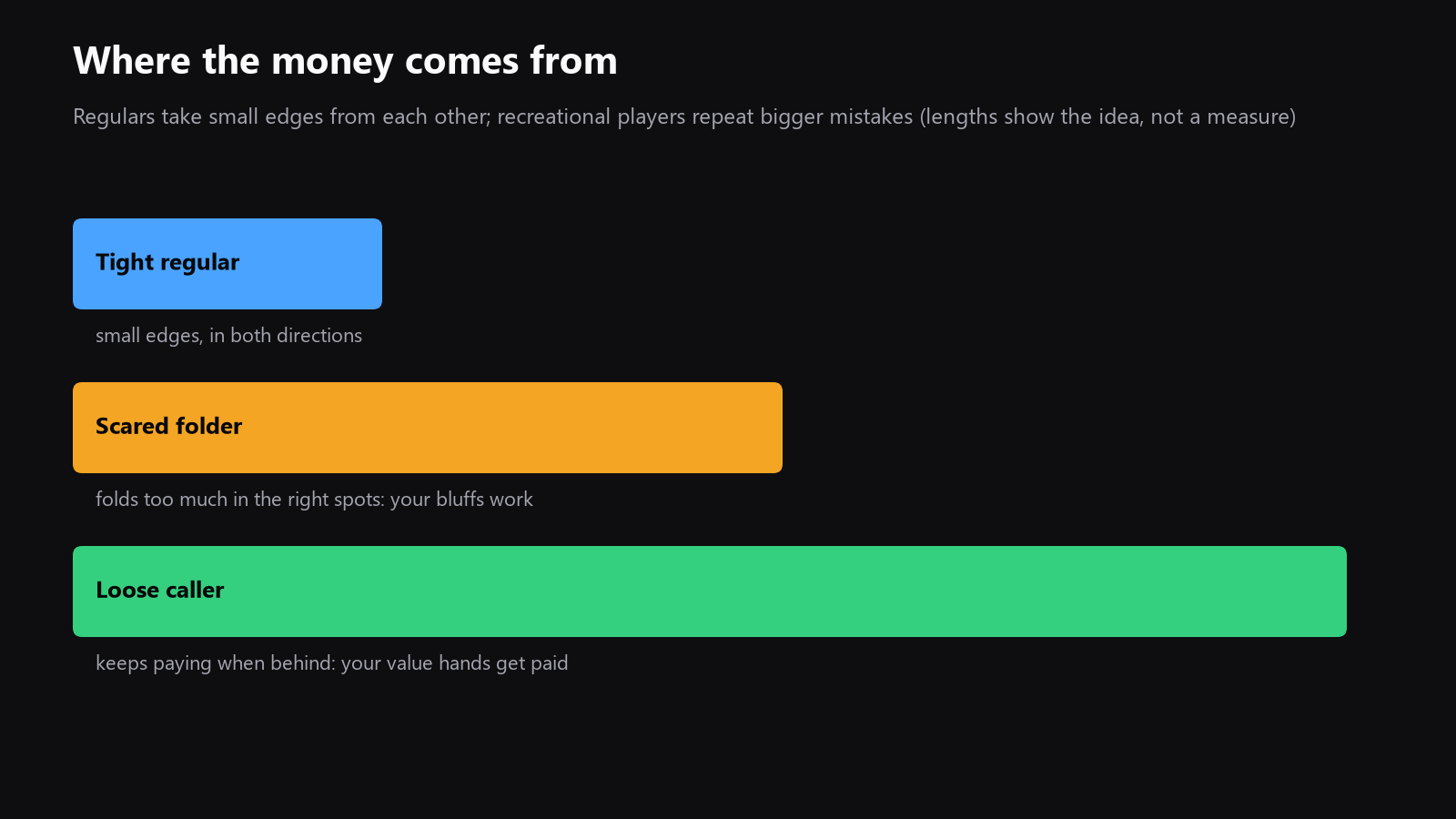
Regulars usually take small edges from each other.
Recreational players create bigger edges because they make bigger mistakes.
That matters for two reasons:
- They put money in the pot with worse hands.
- They keep paying when they are behind.
When a player calls too much, your value hands print money. When a player folds too much in the right spots, your bluffs work. When a player does both at different times, your job is to notice which leak is active in the current hand.
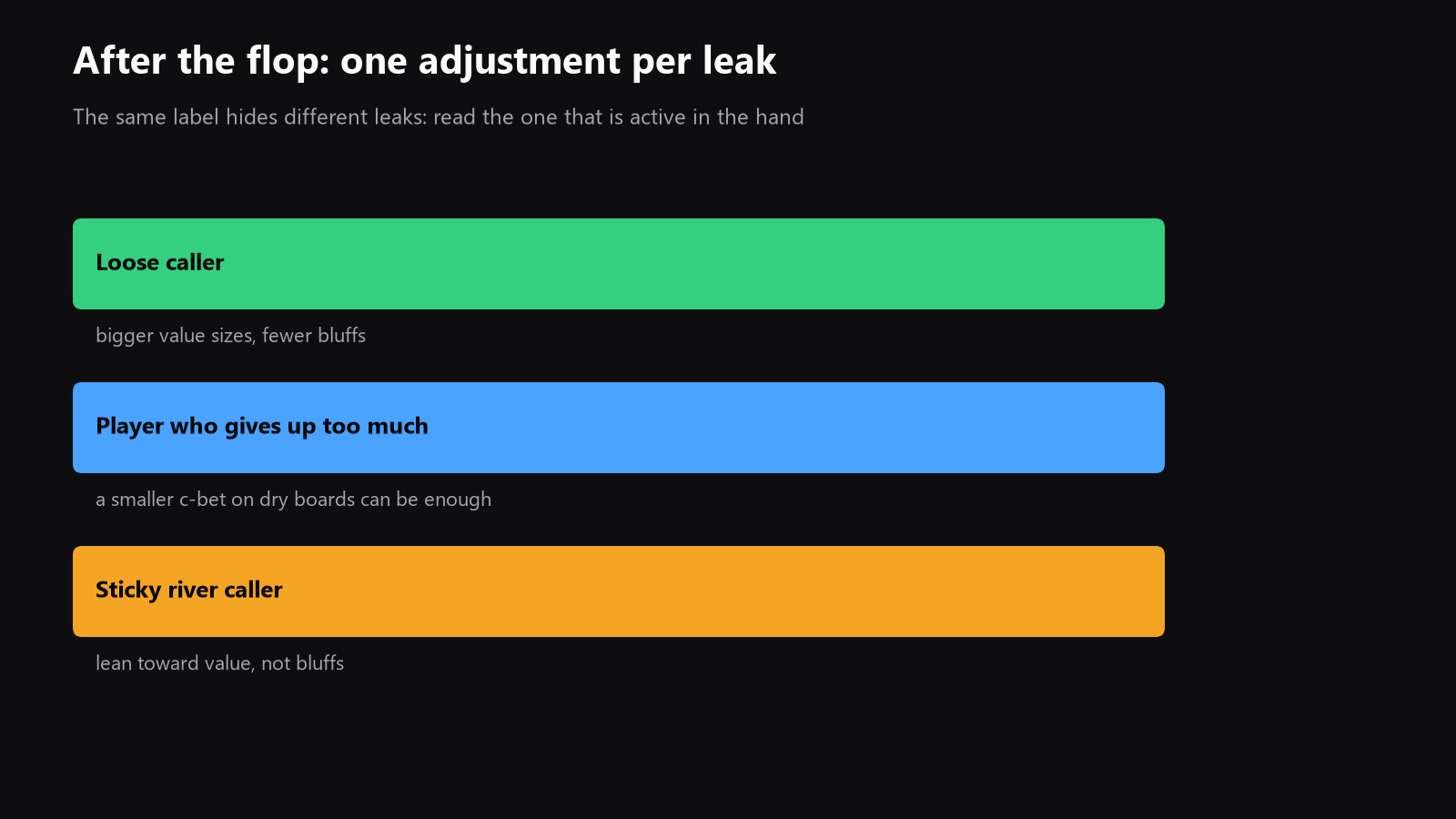
This is where many players go wrong. They label someone a fish, then assume that label explains everything. It does not. Some recreational players are loose callers, some are scared folders, some are aggressive gamblers, and some are just passive and sticky. The label is only useful if it leads to the correct adjustment.
Preflop: isolate them and play more hands in position
Against recreational players, preflop should usually be about isolation.
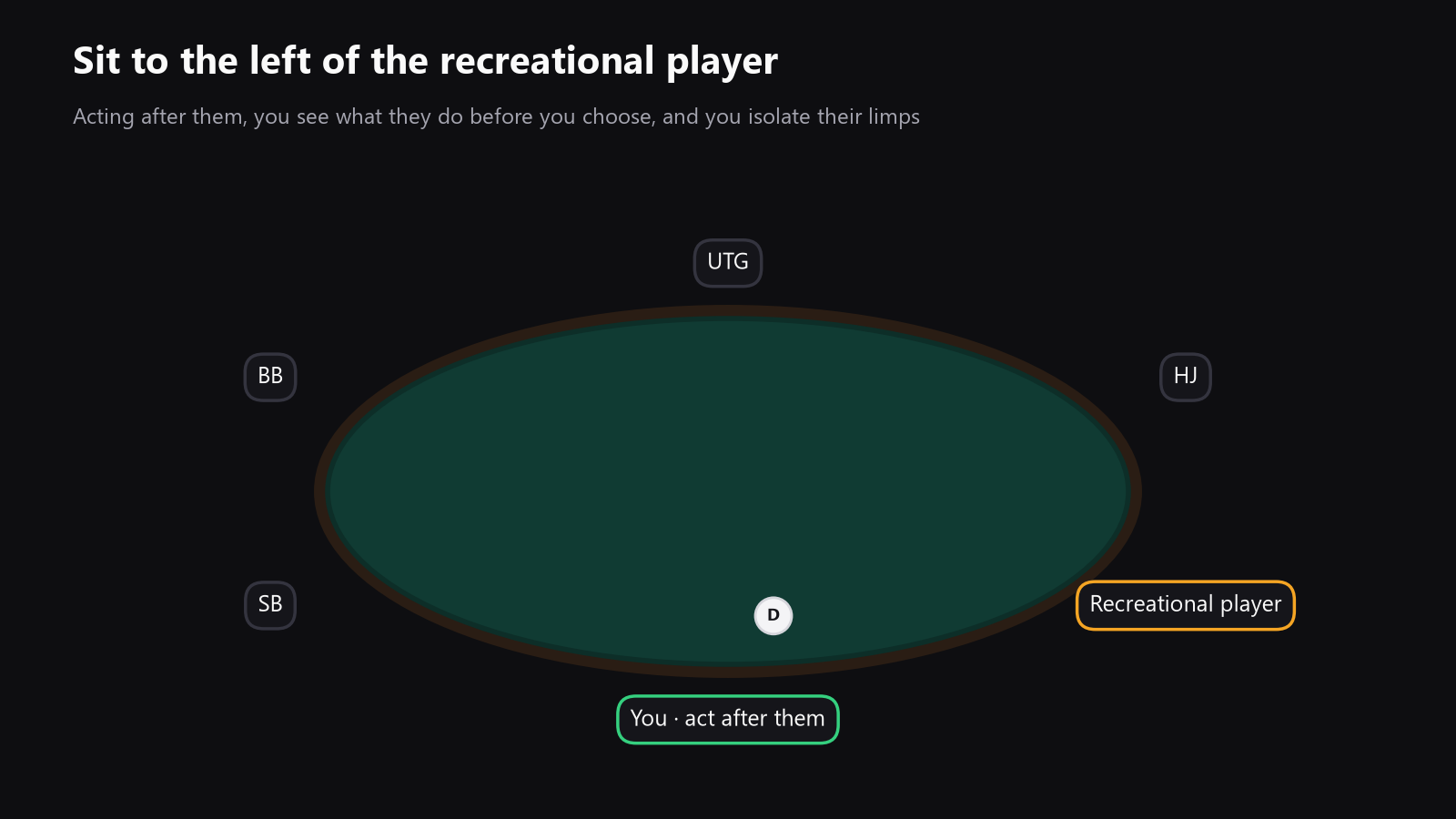
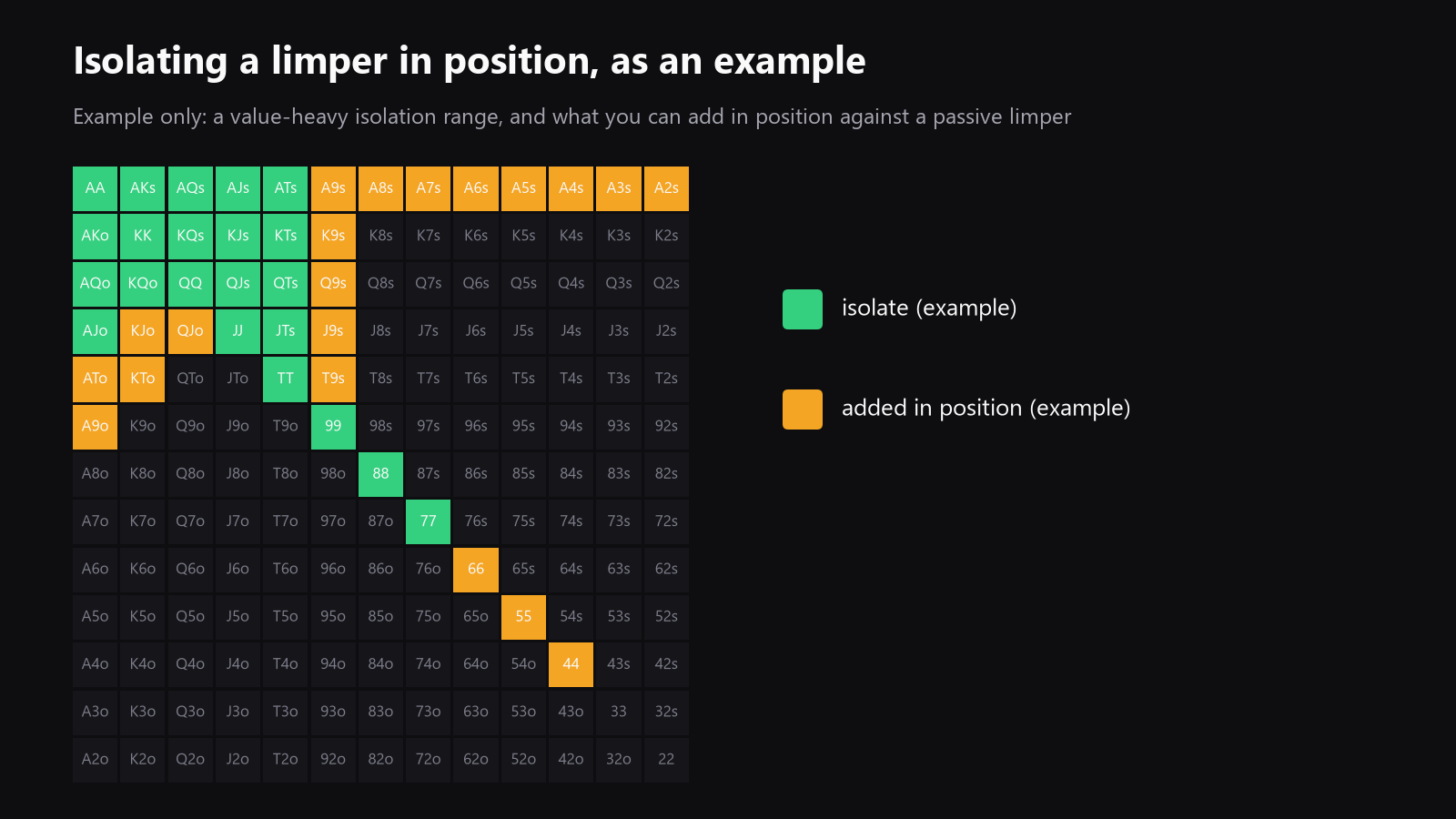
If they limp, raise bigger than you would against a regular, especially when there are players behind you who can still enter the pot cheaply. The goal is simple: take away their free equity and get heads-up or close to it.
If they open too loosely and continue too wide, 3-bet for value more often. If they call too much, keep your 3-bets more value heavy. If they fold too much to 3-bets, you can widen a little with hands that block strong continues or play well postflop, but only against the right opponent.
The key idea is this: you want playable pots against bad ranges, not just bigger pots.
That means:
- Prefer position when you can.
- Avoid bloating pots out of position with medium-strength hands.
- Punish limps and weak opens.
- Do not overdefend just because the price looks small.
- Be more willing to build a pot when your hand dominates their continuing range.
Postflop: value bet bigger and bluff less
This is the heart of the strategy.
Against recreational players, your biggest long-term edge often comes from value betting correctly.
If they call too much, use bigger sizings with hands that are ahead of their range. Top pair, good kicker, overpairs, strong second pair in the right spots, and strong draws all become more profitable when you charge more. You do not need to “trap” as often as you think. Many players leave money on the table by betting too small and letting fish realize equity cheaply.
At the same time, bluff less.
That does not mean never bluff. It means your bluffs should be selective, and they should target the right opponent type.
- Against a calling station, bluff rarely.
- Against a player who gives up too much, bluff more often and especially on the streets where they overfold.
- Against a player who calls flop and folds turn, the turn is often better than the river for pressure.
- Against a player who reaches the river with too many pairs, the river bluff becomes much worse.
The most important adjustment is to stop bluffing because “you represent strength.” Recreational players often do not care what you represent. They care about their own hand.
So ask one question before you bluff: does this player actually fold enough?
If the answer is no, take the cheaper path and value bet when you are ahead.
Sizing up the right hands
A common mistake is to keep every bet size standard.
Against recreational players, sizing should follow their tendencies.
If they call too much, size up with value. If they are fit-or-fold, standard continuation bets can work well on the right boards, but you still want to be honest about how often they continue. If they chase draws or overcall with weak pairs, your bigger value bets will earn more than small bet sizes.
Think in terms of range interaction:
- Dry board, player who gives up too much: a smaller continuation bet may be enough.
- Wet board, player who calls too wide: bigger value sizings become more important.
- River against a sticky caller: lean toward value, not bluff.
- River against a player who can fold one-pair hands: choose your bluff spots carefully and use blockers if you know what you are doing.
The point is not to bet big every time. The point is to bet big when they call with worse.
Multiway pots and short stacks
Recreational players often create more multiway pots, and that changes everything.
In multiway pots, bluff less and value more. Your equity realization drops, and people continue with stronger ranges. That means medium-strength bluff-catchers go down in value, while hands that can get paid by worse become much better.
In tournaments, stack depth changes the plan too.
With short stacks, the game becomes more direct. Recreational players still make mistakes, but the mistakes are compressed into push, call, and fold decisions. In deep cash games, you get more room to extract with sizing, range pressure, and postflop value lines.
So do not copy a cash-game line into a short-stack spot, or the other way around.
Common mistakes when you play against fish
Here are the errors I see most often:
- Trying to outplay them instead of outvalue them.
- Bluffing because you think they “should” fold.
- Slowplaying too much and letting them escape cheap.
- Treating every loose player as a calling station.
- Treating every passive player as weak.
- Ignoring rake, especially in small pots and at lower stakes.
- Forgetting that the same opponent can play differently in different spots.
That last point matters a lot. A player can call too wide preflop, then fold too much to turn pressure. Or they can be passive in single-raised pots and sticky in 3-bet pots. Your adjustment should follow the hand, not the stereotype.
How to study this away from the table
If you want to get better at beating recreational players, study the kinds of situations they create most often.
That is where a tool like Poker Exploit can help. The HUD panel shows these six observed stats: VPIP, PFR, 3-bet, fold to 3-bet, flop c-bet, and fold to flop c-bet, so you can tell a loose caller from a tighter regular without guessing. The Reveal module shows what the players at your limits actually do, from your own hand histories, so you can see whether the pool is folding, calling, or raising in the spots that matter. The Plan module then points you toward the situation that costs you the most.
One screen in the program, for example, shows the field checking the flop through 54% of the time and betting 17%. That kind of pool tendency changes how often you should value bet, bluff, and size up.
And because the Dashboard shows the rake next to your result, you can see how much of your win rate is real edge and how much is being swallowed by costs. That matters a lot when your main profit source is a recreational player who pays you in small pieces, not just in one big pot.

The simple rule
If you remember only one thing, remember this:
Against recreational players, play less fancy and more honest.
Value bet the hands that are ahead. Size up when they call too much. Bluff less when they do not fold enough. Isolate them preflop when you can. And keep learning the difference between a player who looks weak and a player who actually leaks.
That is how you turn the softest seats into the best ones.
Do it on your own hands.