
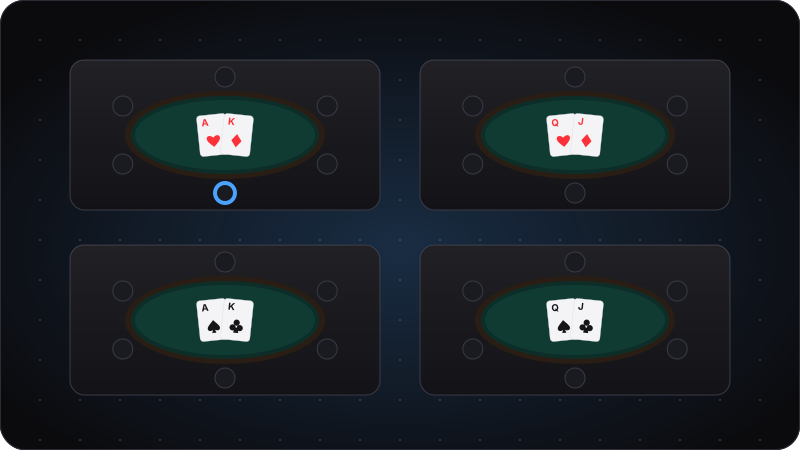
When you play poker online, you are not just choosing a game. You are choosing a room, a format, a lobby, a pace, and a record of every hand you play.
That matters more than many players think. A good decision on the table still needs a good environment around it. If the room is expensive, the format is wrong for your schedule, or you play too many tables for your attention, your win rate suffers before the cards even matter.
The good news is that online poker gives you choices. If you know what to look for, you can make those choices on purpose.
Start with the room, not the first lobby you see
Before you worry about a hand range or a solver line, ask a simpler question: where should you play?
A good online poker room is not just a place with active tables. It is a place that fits your goals. The right room for a beginner, a volume grinder, a tournament player, and a casual player are often different.
Look at these points first:
- Traffic: Are there enough players at your stakes at the times you actually play?
- Rake and rewards: How much does the room take from each pot, and what do you get back?
- Software: Is the client stable, clear, and easy to use?
- Game selection: Does the room offer cash games, MTTs, Sit & Gos, Spins, and the stake sizes you want?
- Payment methods: Can you deposit and withdraw easily in your country?
- Hand histories: Does the room save hands in a usable format?
- HUD rules: Does the room allow a heads-up display, and under what conditions?
- Support and security: If something goes wrong, can you reach help quickly?
If you are serious about improving, hand histories should be near the top of the list. A room that saves your hands clearly and keeps them long enough for review is far more useful than a room that only looks soft on paper.
A simple rule helps here: if you will study your play later, choose a room that lets you keep the material.
Choose the format that fits your life and your edge
Online poker is not one game. It is several formats that play very differently.
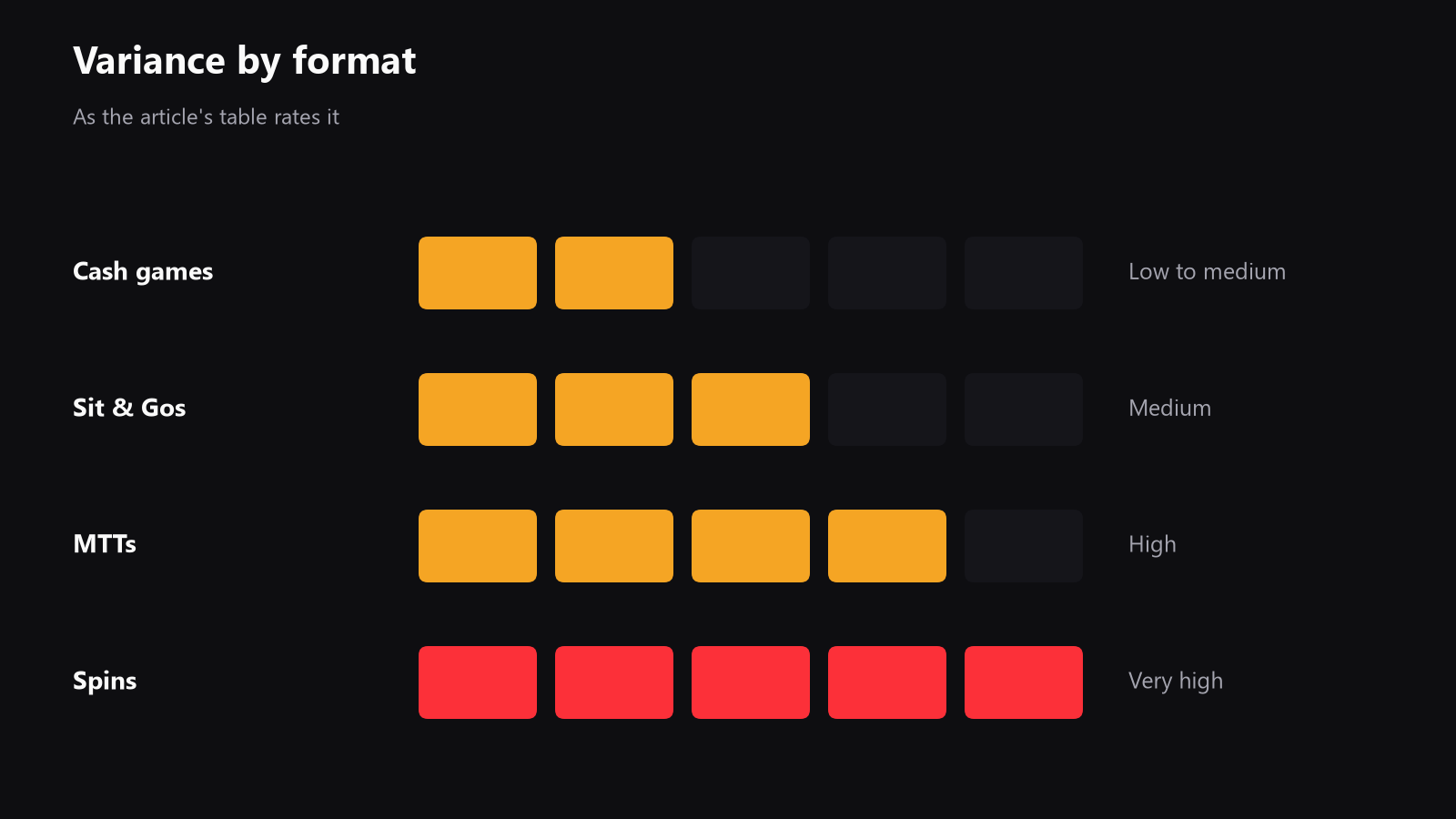
Here is the short version:
| Format | Typical feel | Variance | Best for |
|---|---|---|---|
| Cash games | Flexible, repeatable, deep-stack decisions | Low to medium | Players who want control and shorter sessions |
| MTTs | Long sessions, big fields, endgame pressure | High | Players who want upside and do not mind swings |
| Sit & Gos | Compact, structured, often shallow later | Medium | Players who like small, contained sessions |
| Spins | Very fast, short-handed, swingy | Very high | Players who want volume and fast decisions |
If you are new, cash games are often the easiest place to build a routine. You can stop at any time, the structure stays familiar, and every hand can be studied later in a clean way.
If you like tournaments, accept the trade-off. MTTs are exciting, but they punish impatience. You can play well for hours and still have a losing result because the payout structure is uneven.
If you want speed, Spins and fast-fold formats give you hands quickly, but they also reduce the number of situations where table selection matters.
The right format is not the one that looks coolest. It is the one that matches your time, your patience, and the kind of review you are willing to do later.
Pick tables with care, not just stakes
Once you have chosen a room and a format, your next job is table selection.
That does not always mean the same thing. In some rooms, you can choose from visible lobbies and seat yourself in the softest spots. In others, the software gives you less control. But even then, you still make table choices through stake selection, time of day, format, and whether you join a regular table or a faster pool.
At cash games, look for signs that the game is worth playing:
- players seeing many flops
- loose action before the flop
- deep stacks, when deep play is your strength
- weak limps and passive calling
- a table with room for position advantages
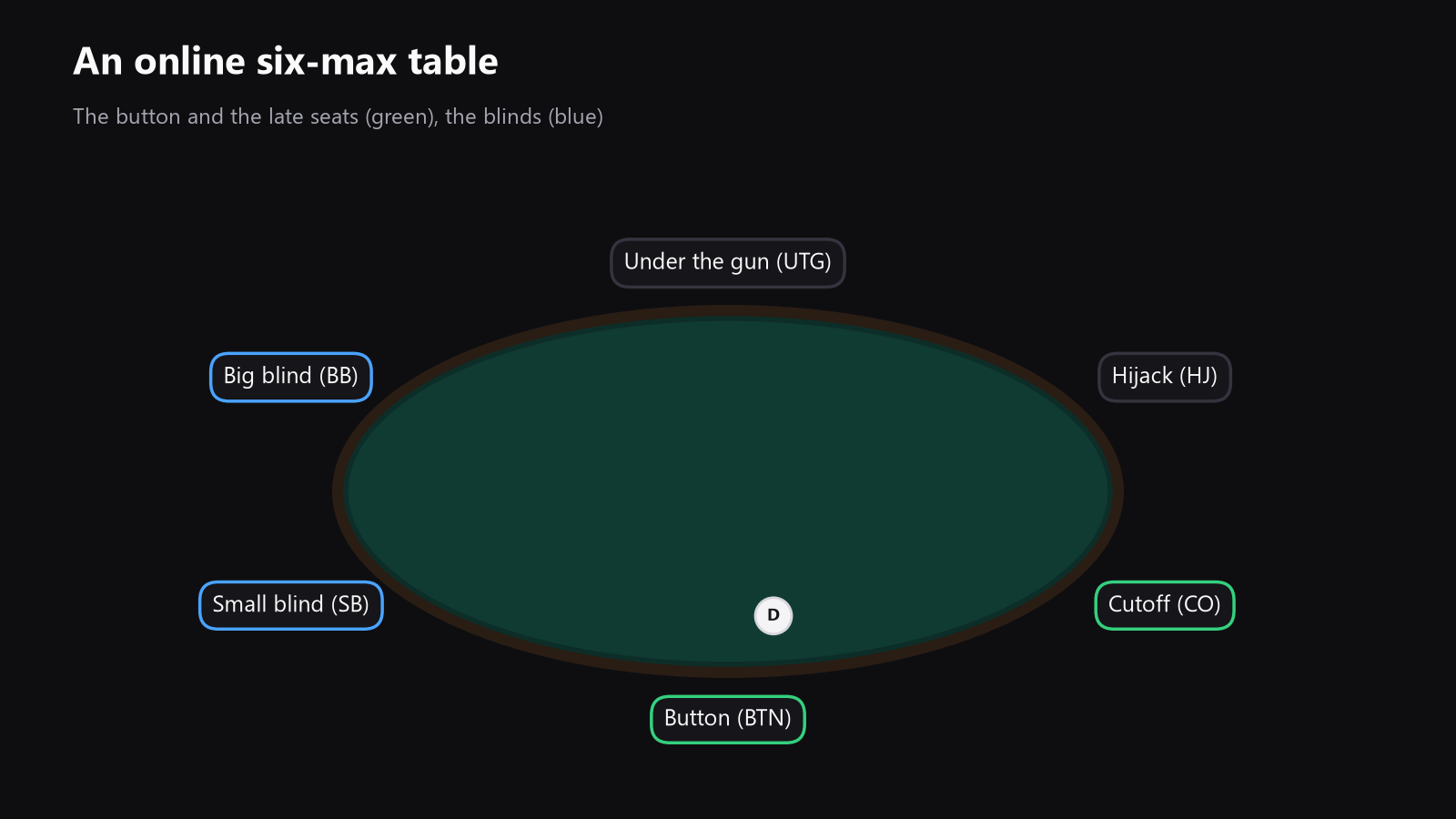
If you can choose your seat, choose position over comfort. Being on the left of aggressive players is usually better than being on their right. In online poker, position still drives profit.
At tournaments, table selection is more limited, so your edge comes more from the room, the field, the structure, and your late-game skill. Even there, the seat draw and table flow matter. A bad seat against the wrong stack sizes can cost you a lot.
At Spins and fast-fold pools, you usually do not get much table selection at all. That is part of the price you pay for volume.
The point is simple: if the lobby gives you useful information, use it. Do not register the first table that opens just because it opens first.
Multi-tabling is a tool, not a badge
Playing more than one table can increase your hourly volume. It can also destroy your decision quality.
That is why multi-tabling should be added slowly.
Start with one table. Then add a second only when you can still do all of these things comfortably:
- notice stack sizes and positions
- choose bet sizes on purpose
- keep track of who is aggressive and who is passive
- remember the previous action without guessing
- finish a session without feeling mentally crushed
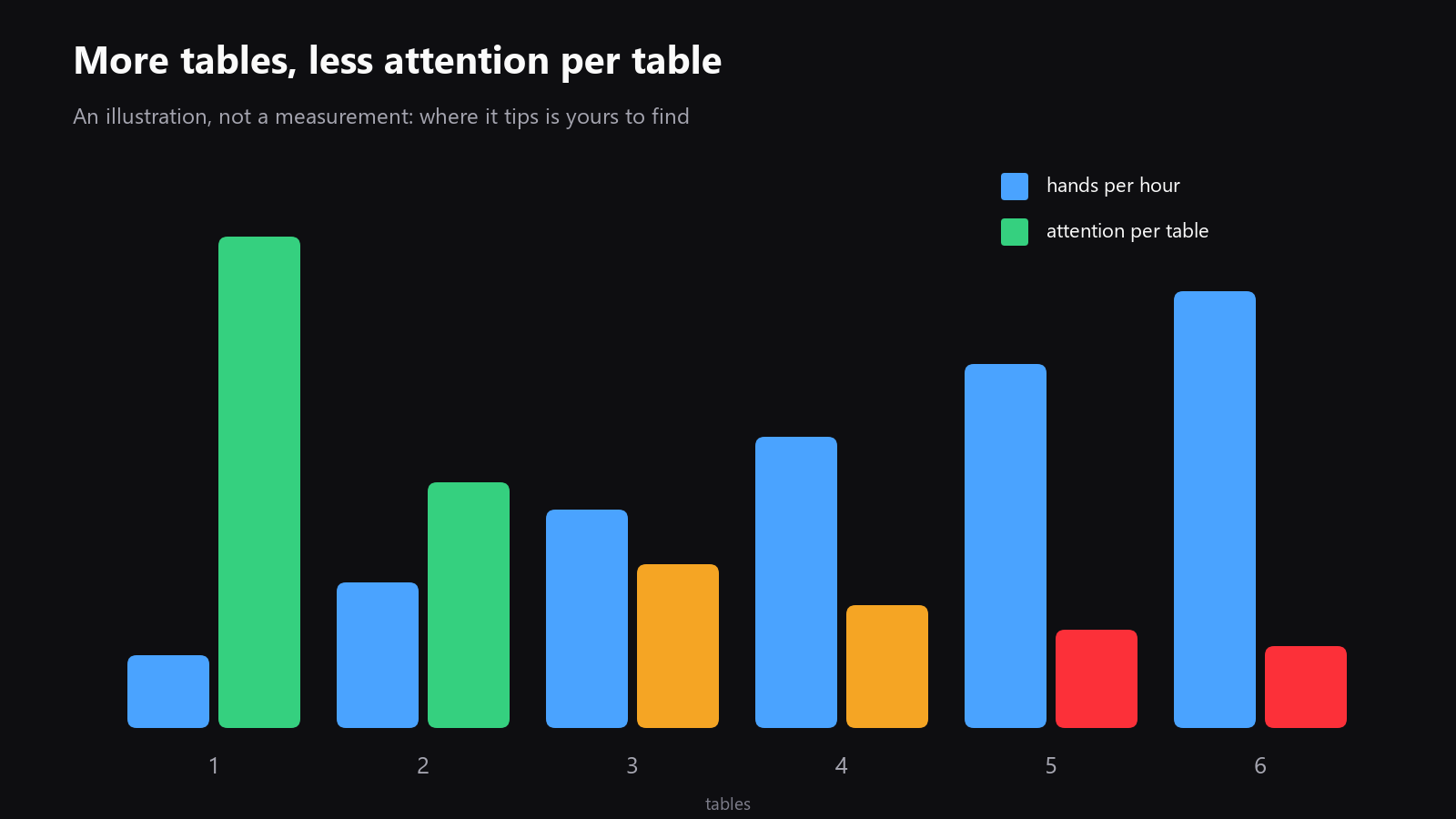
A lot of players add tables too early because they want to feel productive. That is a mistake. Two tables where you think clearly are better than six tables where you are guessing.
Signs you are overdoing it:
- you time-bank more often
- you miss value bets
- you stop taking notes
- you forget which player just showed aggression
- your red line or postflop decisions become sloppy
- you feel busy, but you cannot explain your last five pots
A good rule is to test table counts like an experiment. Play one count for a while, then compare it with the next. Do not ask only how much volume you added. Ask whether your decisions stayed sharp.
If a new table count makes you less accurate, it is not helping yet.
Use a layout that helps your brain
Online poker rewards clarity.
A good layout should make the game easier to read, not prettier. If your tables are too small, too crowded, or too buried under other windows, you will lose information. If they are too large, you may not be able to keep up with the pace.
Try to keep your setup simple:
- tables arranged in a way you can scan quickly
- bet sizes easy to see
- chat, animations, and distractions reduced
- hotkeys or shortcuts enabled if the room allows them
- notes and colours visible when you need them
If you play on a laptop, be even stricter. A small screen punishes clutter. A clean client often matters more than people expect.
The best online setup is the one that leaves your attention for the hand, not for the software.
Keep your hand histories
This is where online poker becomes much more useful than live poker.
In live poker, you rely on memory, notes, and rough estimates. Online, the room can keep the hands for you. That means your sessions can become a database instead of a blur.
If you want to improve, make sure of three things:
- Hand histories are enabled
- You know where the files are saved
- You keep a backup
Do not assume that the room will keep everything forever. Some rooms keep files for a limited time, some save them in different folders, and some make older hands awkward to retrieve.
If you study your game seriously, treat hand histories like evidence. Save them. Organise them. Back them up.
This is also the point where a tracker becomes valuable. Poker Exploit, for example, can read the hands you already played and turn them into the Dashboard, Results, and Self Analyser modules, so your online volume becomes something you can actually review. That means you can see where your money went, where the rake landed, and which situations deserve work.
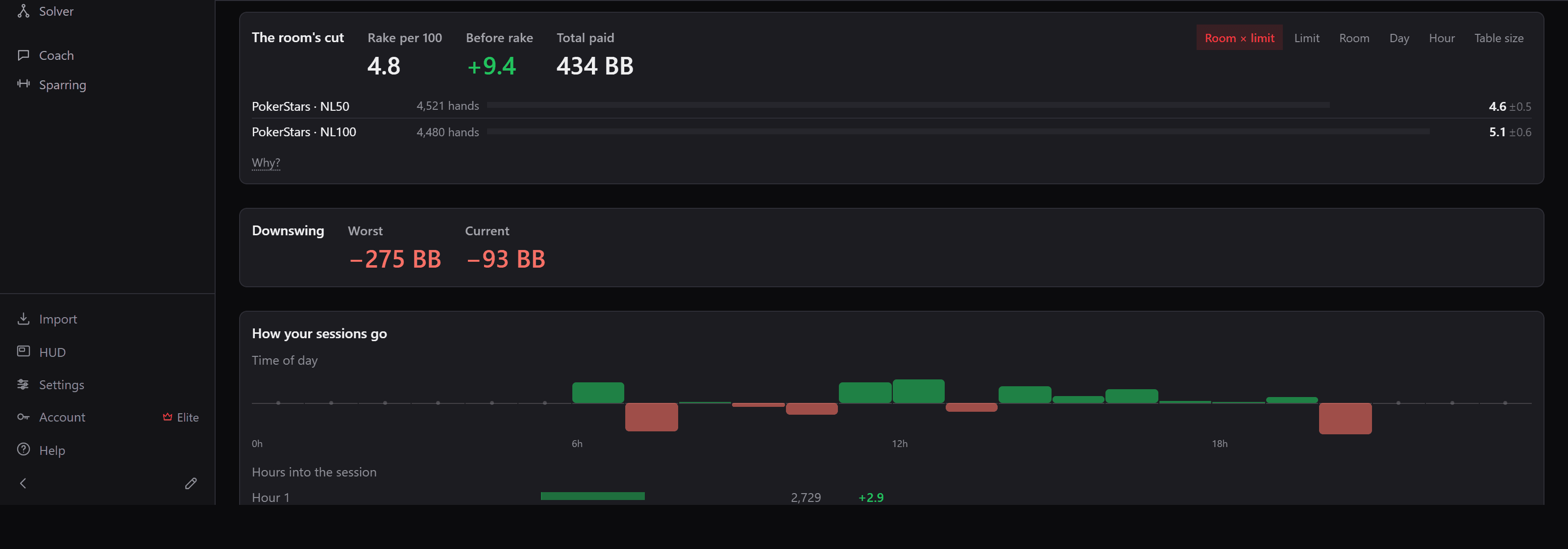
That is the real advantage of online play. Every session can leave a trail.
What to do after each session
If you want poker online to improve your game, not just entertain you, build a short review routine.
After a session:
- check your overall result
- note whether the sample is big enough to mean anything
- review one or two hands where you felt unsure
- mark recurring spots, not just coolers
- compare today’s game with what you intended to play
Do not judge yourself only by the result of one session. Online poker is full of variance. A good session can lose money, and a bad session can run hot.
That is why your own record matters. When you have hand histories, you can separate what is real from what is noise.
A tracker is useful here, but the habit matters more than the software. The goal is not to look busy. The goal is to learn something useful from the hands you already played.
A simple way to choose where to play online
If you want a practical order of decisions, use this:
- Choose the format you can study and sustain.
- Choose the room with the right traffic, rake, and software.
- Choose the table that gives you the best conditions.
- Choose the number of tables you can handle without losing accuracy.
- Keep the hand histories so your sessions can teach you something later.
That order keeps the focus on what actually matters.
Many players do the opposite. They start with the biggest bonus, the flashiest lobby, or the fastest volume. Then they wonder why they are not progressing.
The better path is less glamorous, but more profitable in the long run.
Final takeaway
To play poker online well, you need more than a bankroll and a login.
You need a room that fits your goals, a format that fits your time, tables that fit your edge, a number of tables that fits your attention, and hand histories that let you review what happened.
If you get those five things right, the game becomes much more manageable. And once your hands are saved, they can also become a study tool, not just a record of wins and losses.
Do it on your own hands.