
If you are new to poker, the biggest danger is not that you do not know enough theory. It is that you repeat a few expensive mistakes over and over, often without noticing them.
That is good news, because beginner poker mistakes are usually simple to identify. You do not need to become a solver expert to improve quickly. You need to stop bleeding chips in the same places, and learn how to review your own hands with a clear head.
This article covers the most common poker mistakes beginners make, why they cost so much, and how to spot them in your own database or hand history review.
The short version: most beginner mistakes come from four problems
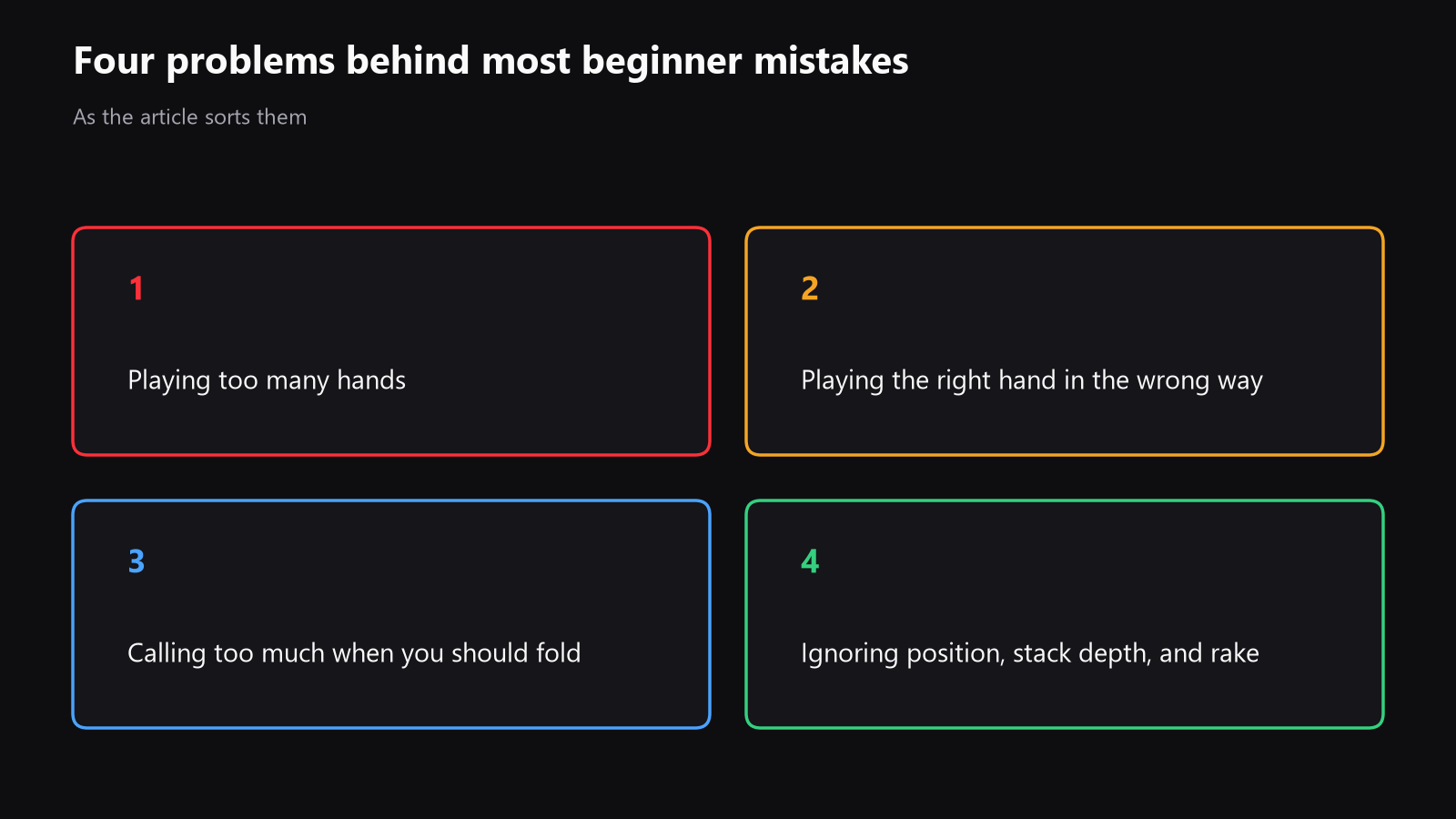
Almost every costly beginner leak fits into one of these buckets:
- Playing too many hands
- Playing the right hand in the wrong way
- Calling too much when you should fold
- Ignoring position, stack depth, and rake
If you fix only those four areas, you will usually improve faster than a player who studies fancy bluffs while still making basic errors.
1. Playing too many hands
This is the classic beginner mistake.
New players usually want to be involved. They look at two cards and think, “This seems playable.” So they enter too many pots with hands that look fine in isolation, but are weak in the situations that matter: out of position, against stronger ranges, and in raked games where marginal spots are expensive.
Typical examples:
- Limping too many hands
- Calling raises with weak holdings instead of folding
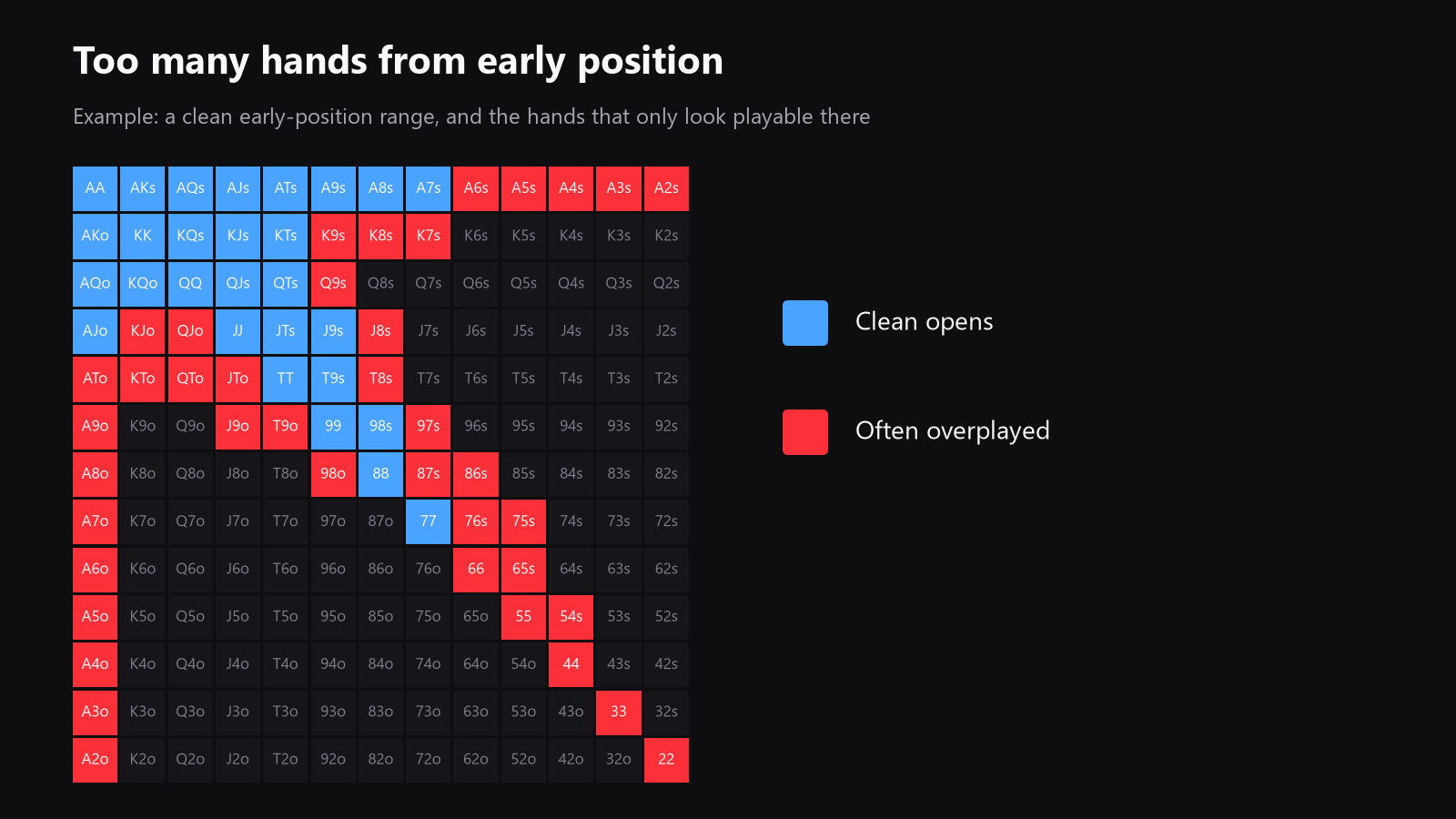
- Opening too wide from early position
- Defending the blinds too loosely
- Calling 3-bets with hands that play poorly after the flop
Why it costs so much: Every extra hand you play is not just one more chance to win. It is also one more chance to pay rake, miss the flop, face pressure, and make a second or third mistake later in the hand.
At micro and small stakes, this is even more important because rake takes a bigger share of your profit.
How to spot it in your own hands: Look at the gap between VPIP and PFR. If you voluntarily put money in the pot far more often than you raise, you are probably calling too much preflop. Then check where those hands come from. If you are playing too many weak hands from early position or from the blinds, that is one of the first leaks to fix.
2. Ignoring position
Position is one of the easiest concepts to understand and one of the easiest to underestimate.
When you act last, you see what other players do before making your decision. That extra information is worth a lot. When you act first, you are guessing more often, and your mistakes become more expensive.
Beginner patterns:
- Playing the same hands from every seat
- Overvaluing hands just because they look strong, like KJo or ATo, from early position
- Floating or bluffing too often when out of position
- Calling too many hands from the blinds, then trying to “win it back” postflop
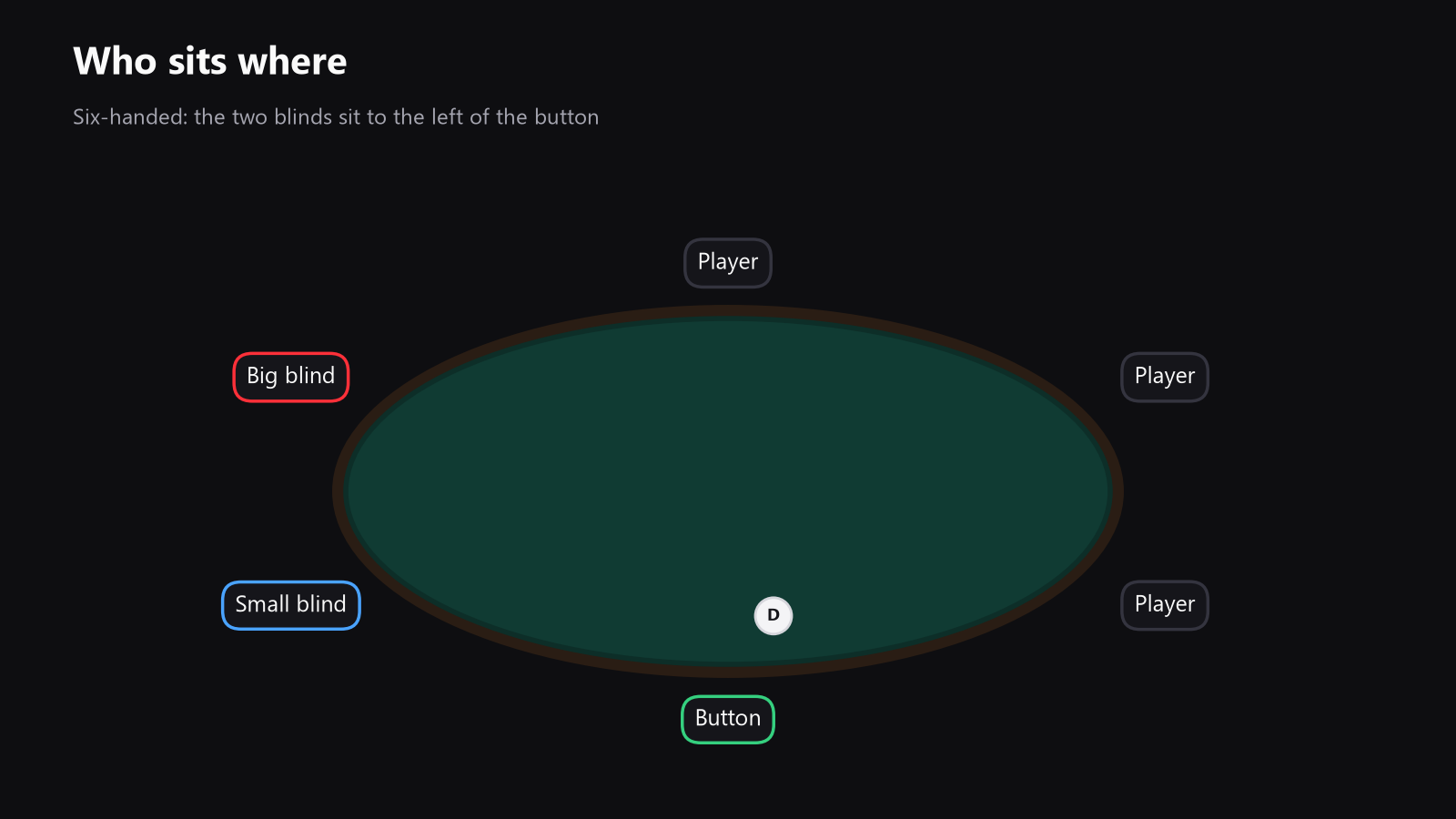
A simple rule: The earlier your position, the tighter you should be. The later your position, the more you can widen your range, especially when the players behind you are passive.
How to spot it: Break your results down by position. If your loss rate is much worse from the blinds than from the button, that is normal. But if your cutoff and button numbers are not clearly better than your early position numbers, something is off. Either you are not stealing enough in late position, or you are not playing those spots well enough after the flop.
3. Calling too much
A lot of beginners think their main problem is not bluffing enough. In reality, their bigger problem is often calling too much.
This shows up in many forms:
- Calling preflop raises with hands that should fold
- Paying off too often on the flop and turn
- Making “curious” river calls with weak bluff catchers
- Slowplaying hands that should value bet
- Continuing in a hand without a clear plan
Calling feels safe because you are not risking the extra chips that a raise or bluff would risk. But passive mistakes add up quietly, and they are hard to notice because you see many showdowns only after the money is already gone.
A useful question: When you call, what worse hands or bluffs do you beat?
If you cannot name them, your call is probably too loose.
How to spot it: Review your biggest losing showdowns. If you reached the river with a hand that was never strong enough to value bet, ask whether you really had enough equity or enough bluff catching reason to continue. Beginners often call because they “do not believe” the opponent, not because the pot odds make sense.
4. Chasing draws without enough reason
Draws are exciting. That is exactly why beginners overplay them.
A flush draw or straight draw is not automatically worth continuing with. It depends on:
- Pot odds
- Implied odds
- Stack depth
- Position
- How often you will get paid when you hit
- How often your draw is actually live
The most common mistakes:
- Chasing weak draws in small pots
- Calling too much with hands that have little showdown value when they miss
- Overvaluing backdoor equity
- Ignoring reverse implied odds, especially with dominated draws
Example: If you have a gutshot and little else, the pot may look tempting, but if you are likely to lose more money on later streets when you hit a disguised but second best hand, the call can still be bad.
How to spot it: Filter your hands where you continued with a draw and compare the money won when you hit versus the money lost when you missed. Beginners often discover that some draws are fine, but too many of the calls around them are not.
5. Treating every hand as if it were only about your cards
This is a deeper beginner mistake, and it often survives longer than the obvious preflop leaks.
Poker is not just “I have top pair” or “I have an overpair.” It is a game of ranges, board texture, and ranges against ranges.
That means you need to ask:
- What hands can villain have here?
- Which hands does villain bet this board with?
- Which hands continue against your raise?
- Which parts of your range are strong, medium, or weak on this board?
Beginners often miss this and make two opposite mistakes:
- They value bet too thinly on scary boards
- They bluff boards where the opponent’s range is already strong and stable
How to spot it: Look at spots where you bet one street and gave up, or where you called three streets without much improvement. If the same type of board keeps beating you, you probably need to study the board and range interaction, not just your hole cards.
6. Not respecting rake
At beginner stakes, rake is not a background detail. It is a major part of the game.
That means marginal calls and small pots become much worse than they look. A hand that is close to breakeven before rake can become a clear loser after rake.
Beginner mistakes tied to rake:
- Too many small pots played passively
- Too many marginal calls preflop
- Too much low equity defense in raked games
- Too much focus on winning pots, not on winning profitable pots
How to spot it: Do not just look at your net result. Look at how much rake you paid and what it means in big blinds per 100 hands. If rake is taking a larger share of your win rate than you expected, you need to tighten the parts of your game that create thin, low value spots.
7. Overplaying hands after the flop
Many beginners think the hand becomes easier after the flop because they “made something.” In reality, that is when the real mistakes begin.
Common postflop errors:
- Betting because you have a pair, not because it is a good bet
- Checking too much and giving away initiative
- Calling one street too many
- Failing to protect strong hands on wet boards
- Bluffing into ranges that do not fold enough
A strong beginner habit is to ask, on every street:
- What am I trying to make the opponent do?
- What worse hands call me?
- What better hands fold?
- What happens on the next card?
If you do not know the answer, the bet or call may be automatic rather than intentional.
8. Losing control of your emotions
Tilt is not only about rage. It also includes boredom, frustration, overconfidence, and the desire to “get even.”
Common tilt patterns:
- Increasing stakes after a loss
- Playing too long when you are tired
- Trying to win back a bad session in one hand
- Ignoring your normal ranges because you feel the table “owes” you chips
This mistake is expensive because it often multiplies other leaks. A player who already calls too much will call even more when tilted.
How to spot it: Review your session boundaries. Did your worst mistakes happen late in the session? After a big pot? After a loss? If yes, the leak may be mental as much as technical.
How to spot beginner mistakes in your own hands
Do not start with the most dramatic pots. Start with the most repeated ones.
Here is a simple review process:
1. Check the preflop stats first
Look at:
- VPIP
- PFR
- 3-bet frequency
- Fold to 3-bet
- Position breakdown
A large gap between VPIP and PFR often means too many calls. A weak position breakdown often means you are playing too loose from the wrong seats.
2. Look at your worst streets
Most beginner leaks show up on turn and river, because that is where the pot becomes large and the decisions become less obvious.
Ask:
- Did I call too often on the flop?
- Did I continue without a plan on the turn?
- Did I pay off a value range on the river?
3. Separate result from decision
A bad hand can win. A good hand can lose. That is normal.
If you review only the hands you won or lost, you will mislead yourself. Review the hands where your decision was close, especially the ones you repeat often.
4. Focus on one leak at a time
Do not try to fix everything in one week. Pick the biggest leak, study it, then measure whether it improves.
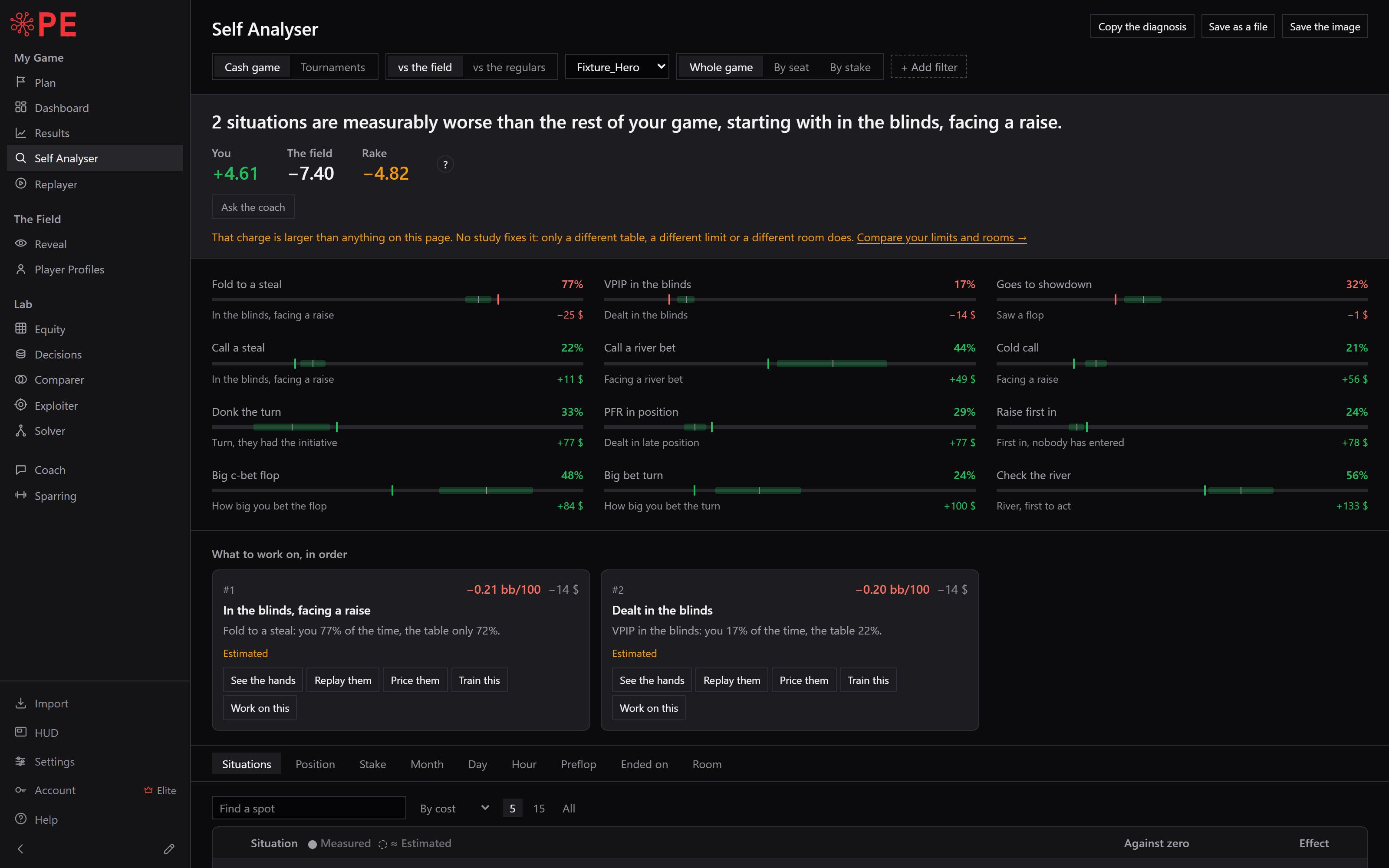
That is exactly why a clear review tool matters. The Dashboard screen shows your win rate, your money won, your rake, your hands, and your run inside a variance cone, so you can see your overall shape without guessing. The Self Analyser then helps you find which situations are costing you the most, by street and by position. And the Plan module can point you toward the spot that matters most, instead of making you guess.

What to work on first, if you are a beginner
If you want the highest return on study time, start here:
- Tighten your preflop range
- Respect position
- Stop calling too much
- Learn the common board textures
- Pay attention to rake
- Review your biggest repeated mistakes, not just your biggest pots
That order is not glamorous, but it works.
The good news is that beginners usually improve quickly once they remove the worst leaks. You do not need to play perfectly. You only need to stop making the same expensive errors.
A simple final checklist
Before you sit down, ask yourself:
- Am I playing fewer hands from early position?
- Am I calling preflop because it is profitable, or because I do not want to fold?
- Do I know why I am betting this flop?
- If I call, do I know what I am hoping to see on the next street?
- Am I still thinking clearly, or am I chasing a result?
If you can answer those questions honestly, you are already ahead of many beginners.
And if you keep hand histories, the next step is to let the numbers show you where the leaks are. That is usually faster than trying to remember every mistake by feel.

Do it on your own hands.