
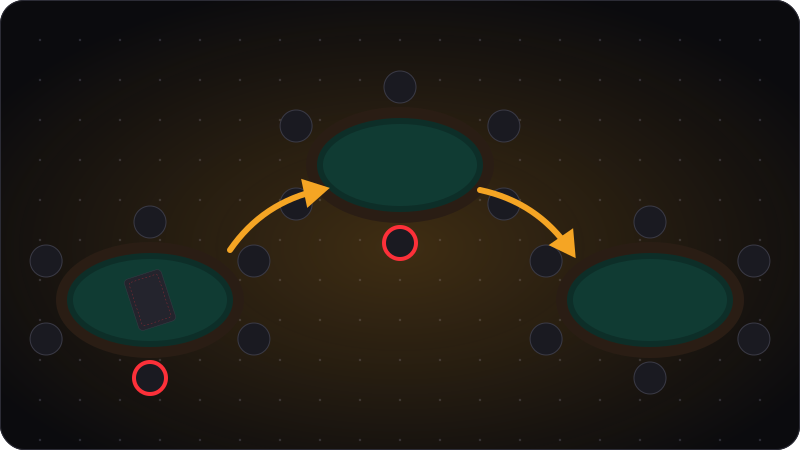
Fast-fold poker is cash game poker with one big twist: when you fold, you do not wait around. You are moved immediately to a new table and dealt a new hand.
That one change affects almost everything.
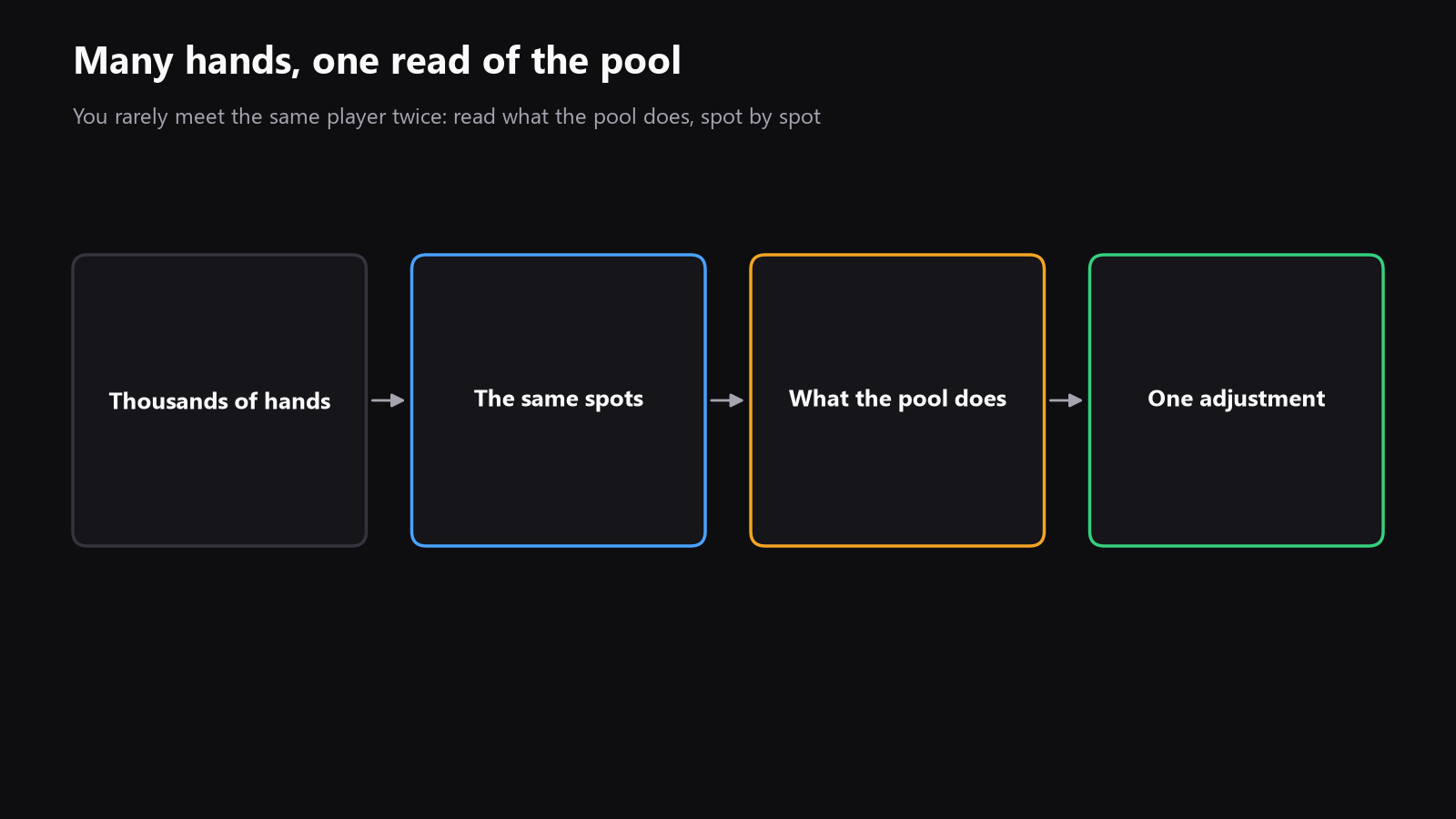
You see more hands per hour. You meet the same opponent far less often. You get fewer chances to build a long story on one player. And because the format constantly resets the table, the game becomes less about memorizing individuals and more about understanding what the pool of players does in each spot.
That is why fast-fold poker needs its own approach.
What fast-fold poker actually is
In a regular cash game, you can sit with the same players for a long time. You notice who opens wide, who folds too much, who likes to float, who overplays top pair. You start adjusting to the table as a group, but also to specific opponents.
Fast-fold changes that rhythm.
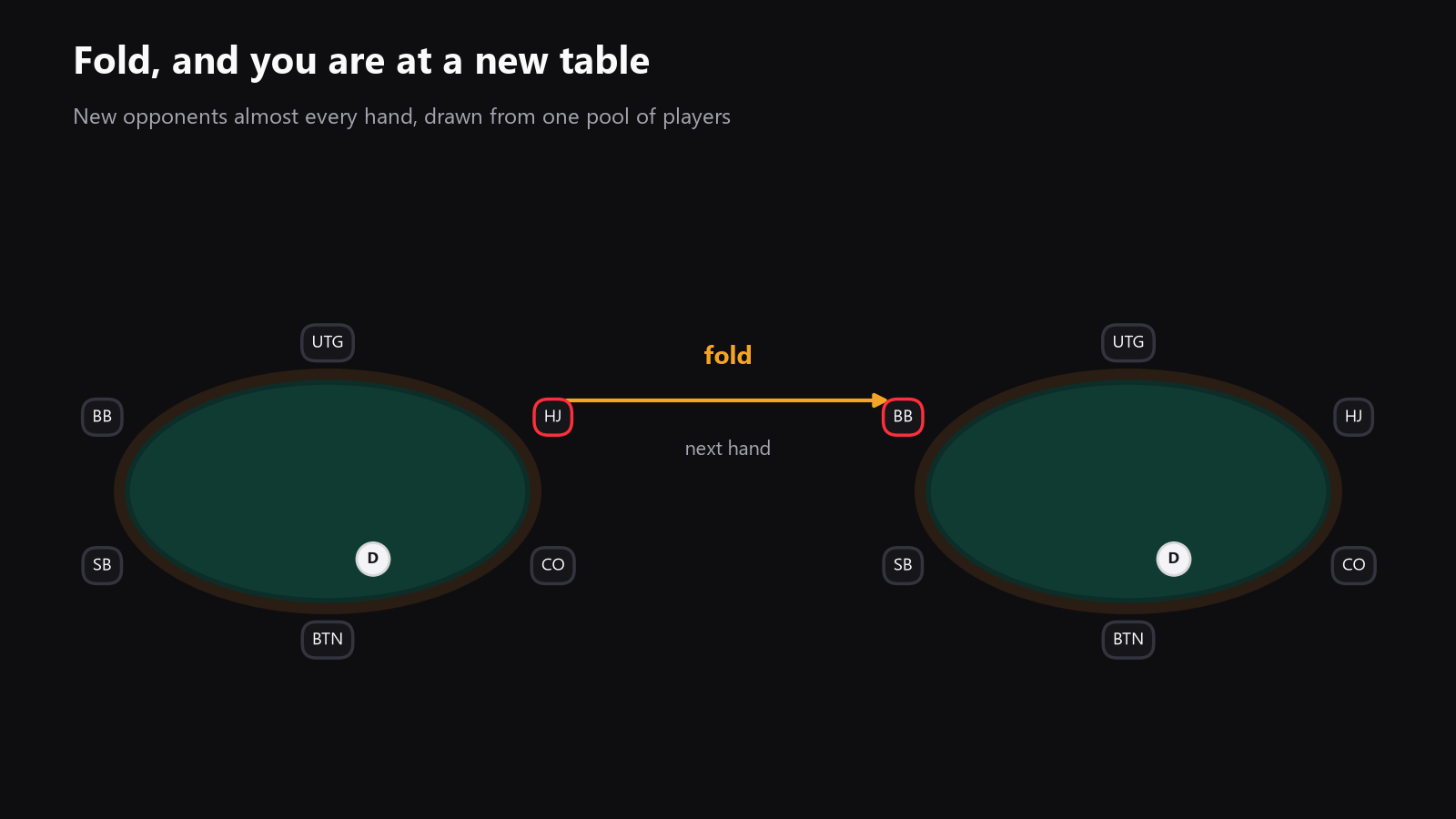
The format uses a pool of players. Once you fold, you are removed from the current hand and immediately reassigned. That means the next hand starts quickly, and often with a different group of opponents.
The result is simple:
- You play many more hands in the same amount of time.
- You get fewer hands on each individual villain.
- You have less time to build deep reads on one player.
- You get more of your edge from population tendencies.
- The blinds matter more because you reach them more often per hour.
- Preflop decisions matter more because you start so many pots with little history.
This is also why fast-fold can feel tighter than a normal cash game. Not because every player is a nit, but because the format reduces the value of long-term table manipulation and rewards clean baseline strategy.
Why the pool matters more than the person
In a normal game, a single opponent can become your main source of profit or your main problem. In fast-fold, that matters less, because the opponent in front of you is constantly changing.
So the right question is not, “What does this one player do?” The better question is, “What does the pool usually do here?”
That shift changes how you think about leaks.
Maybe the pool overfolds to flop c-bets on certain boards. Maybe it continues too much versus small opens. Maybe it is too honest on the river. Maybe the blinds defend too little. Those are pool patterns, and they matter far more than one unusual hand from one player you may never see again.
This is exactly where post-session study becomes powerful. The Reveal module reads what the players at your limits actually did, spot by spot, from your own hand histories, so you can study the population instead of guessing it. In fast-fold, that is not a luxury. It is the core of the game.
How to adjust preflop
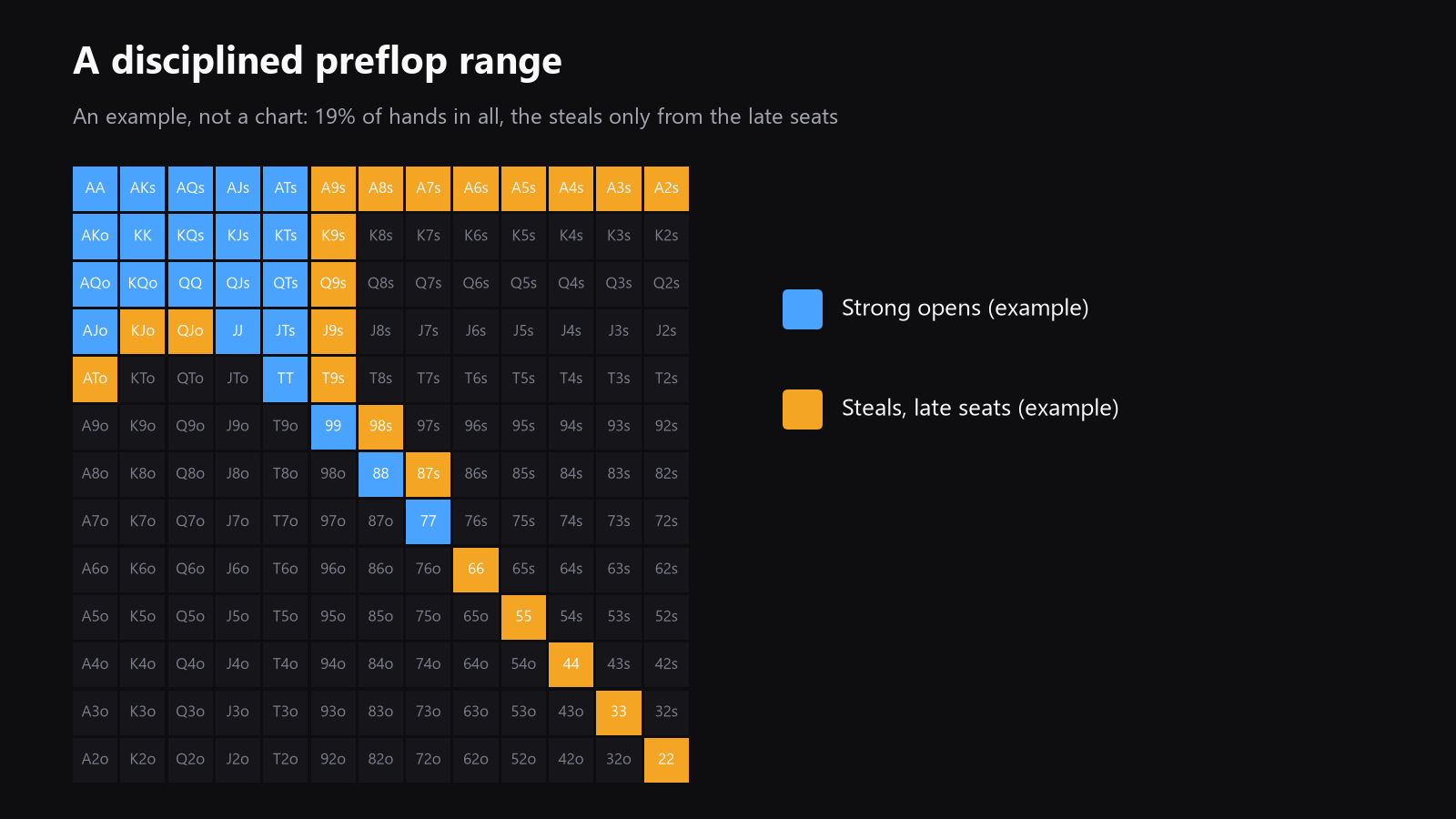
If you play fast-fold well, your preflop strategy should be stable, disciplined, and tied to the pool you are actually facing.
1. Start from ranges, not from moods
Do not widen just because the game is fast. More hands per hour do not mean every hand is profitable. Build ranges you can defend and understand.
2. Pay attention to position
Position matters in every form of poker, but it becomes even more important here. Since you do not get long table dynamics, you need to get more value from good seat and position-based edges.
3. Treat the blinds as a major target
The blinds are where a lot of fast-fold profit comes from. If the pool overfolds there, late-position steals gain value. If the pool defends well, you need better hands and more respect for reverse implied odds.
4. Make 3-bets for the right reason
Some pools fold too much to 3-bets. Others continue too widely. Some do both depending on position and stack depth. The point is not to 3-bet more because you are active. The point is to 3-bet when the pool makes that line profitable.
5. Remember rake
In fast-fold, small pots happen constantly, and rake can eat a large part of thin edges. A hand that looks okay in theory can become too thin once rake is included. That matters a lot when you repeat the same edge thousands of times.
How to adjust postflop
Fast-fold postflop is not about playing scared. It is about choosing your aggression carefully and repeatedly targeting the same population leaks.
Value bets are often huge
Because you do not get long histories, many players fall back on generic calls in clear value spots and avoid difficult river decisions. If the pool pays off too much with second-best hands, value betting becomes one of your biggest sources of win rate.
Bluffing should follow evidence
Do not bluff just because the board looks scary to you. Bluff where the pool actually folds. If players continue too often on certain textures, reduce your bluff frequency there. If they overfold in common c-bet spots, attack those boards more often.
Small c-bets can work, but not everywhere
A lot of fast-fold pools respond poorly to well-chosen small c-bets, especially on boards where your range has the natural advantage. But board texture still matters. A board that hits the caller hard should not be treated like a board that favors the preflop raiser.
Do not overweight one showdown
A single weird call can look like a “read,” but in fast-fold it may just be noise. If you only saw one unusual hand from that opponent and never see them again, you should be careful not to build a strategy on it.
The safer path is pool-based adjustment first, individual adjustment second.

How to study fast-fold poker after the session
Fast-fold is one of the easiest formats to review well, because the same situations repeat quickly and the pool leaves a clear statistical trail.
A good review process looks like this:
- Mark hands that felt uncertain.
- Group them by spot, not by emotion.
- Look for repeated pool behavior.
- Compare your own lines with what the pool actually does.
- Adjust one leak at a time.
That is the kind of work the Reveal module is built for. It reads what the players at your limits actually did, from your own hand histories, so you can see how the pool behaves in spots like blind defense, flop continuing frequencies, turn aggression, and river calling.
Poker Exploit reads PokerStars hand histories, and it does not read GGPoker. If your room lets you use a HUD, a HUD can help you observe your opponents' statistics there, but if a room forbids HUDs in that format, you should not use one. Always check the room’s own rules.
The main lesson stays the same: fast-fold is a population game first.
The big mistakes players make
Most fast-fold mistakes come from trying to treat the format like a normal lineup game.
Mistake 1: chasing player-specific reads too hard
You simply do not get enough hands on most opponents to make every read personal. Build around the pool.
Mistake 2: playing too many marginal hands
Because the game moves quickly, players often loosen up just to stay active. That is usually a mistake. Volume is not an excuse for spew.
Mistake 3: ignoring blinds and rake
Fast-fold hands are small, frequent, and rake-sensitive. If you ignore those two facts, your win rate will suffer.
Mistake 4: bluffing without population evidence
A good bluff in fast-fold is not a creative bluff. It is a response to a repeatable leak.
Mistake 5: failing to review after the session
If you do not study the pool, you miss the main edge the format gives you.
A simple way to think about the format
Fast-fold poker is not “regular poker, but faster.”
It is a different information environment.
You trade table history for volume. You trade deep reads on one opponent for broad reads on a pool. You trade long-term table manipulation for cleaner preflop and postflop discipline. And because that trade changes where the money comes from, it changes how you should study, too.
If you want to get better at fast-fold, stop looking for a perfect read on one player. Build a better model of the pool. Work on the spots that repeat. Pay attention to what the blinds do, what the pool does versus c-bets, and where the rake takes too much of the small pots.
That is how the format is beaten.
Do it on your own hands.