
You open the pot, and someone 3-bets.
Now the decision is on you, and it is one of the most important preflop spots in poker. If you fold too much, opponents can pressure your opens with little resistance. If you continue too wide, you keep entering pots where you are behind, out of position, or both.
There is no single answer that works everywhere. The right response depends on your position, the stack depth, the size of the 3-bet, the player who made it, and how your hand plays after the flop.
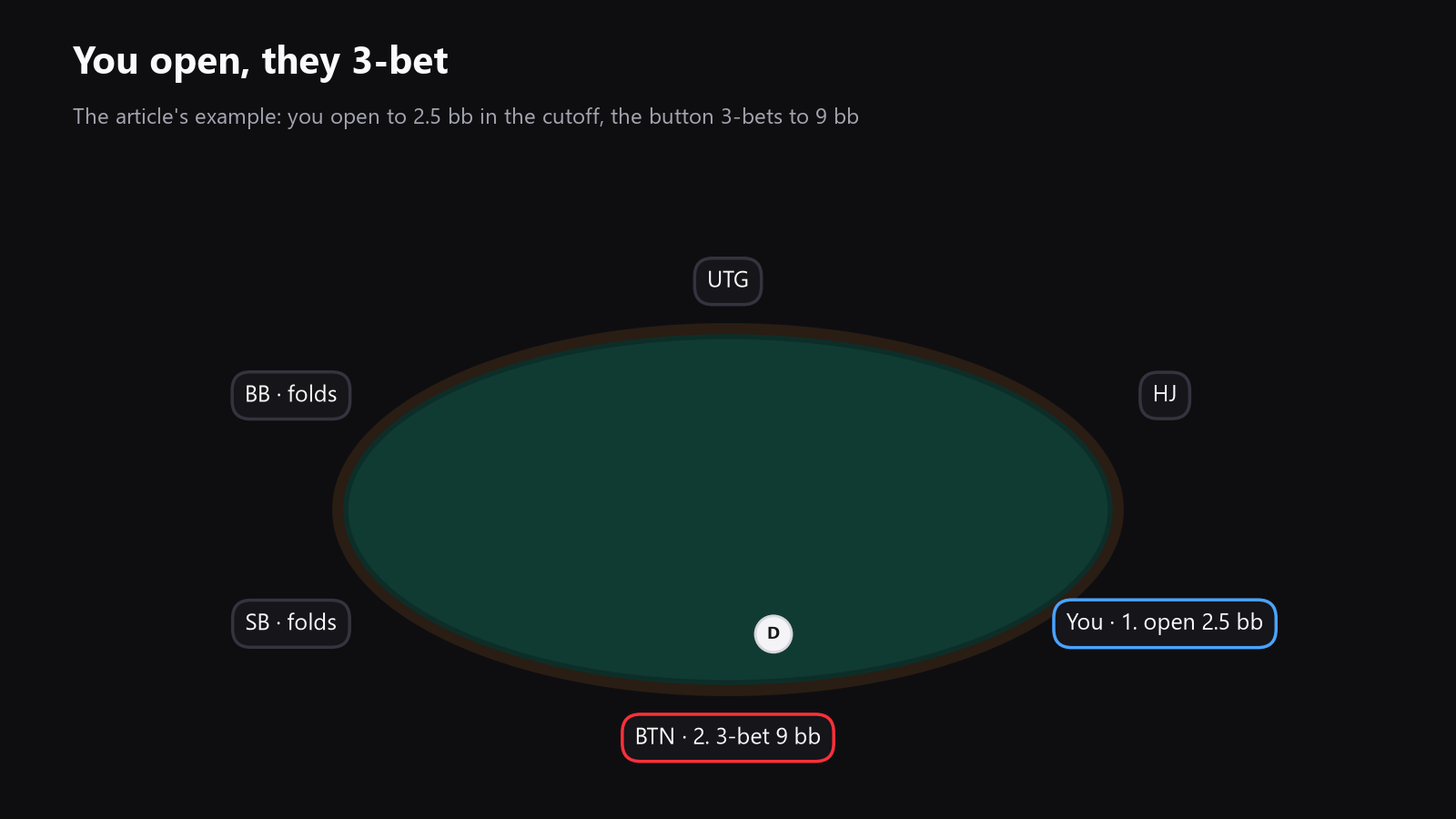
The first question: what is your position?
Position changes the whole spot.
If you are in position, you can call more hands profitably. You act last on future streets, so you realize more of your equity and control the pot better. Hands that are only medium-strength preflop can still play well when you are the one making the decisions after the flop.
If you are out of position, the same hand usually loses value. You have to act first on every postflop street, which makes it harder to realize equity and easier to get put in uncomfortable spots.
That is why a hand can be a reasonable call in position and a fold out of position.
A simple rule:
- In position: call more, 4-bet selectively.
- Out of position: call less, value 4-bet more tightly, fold more often.
Pot odds matter, but they are only the starting point
When you face a 3-bet, the first thing to understand is the price you are getting.
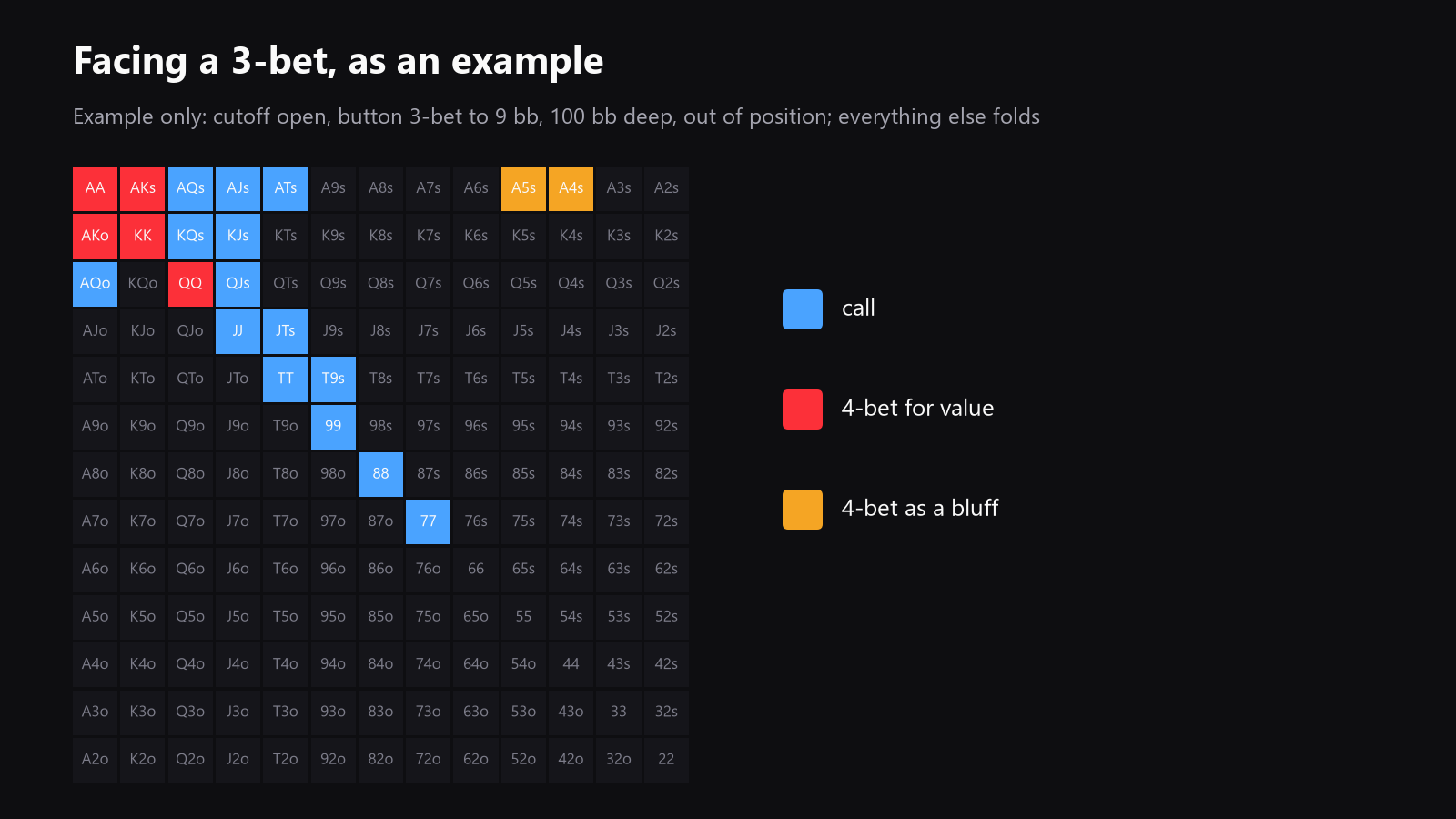
Example: you open to 2.5 bb and face a 3-bet to 9 bb. You now have to call 6.5 bb more. The pot you are trying to win is larger than the extra chips you invest, so you need a certain amount of raw equity just to break even.
But that is not the whole story.
Why not?
Because poker is not just about raw equity. It is about realized equity.
- In position, you usually realize more of your equity.
- Out of position, you usually realize less.
- Against a stronger range, your hand may have enough equity on paper but still play badly in practice.
- At micro and small stakes, rake makes thin calls worse.
So the question is not only, “Do I have enough equity to continue?” The better question is, “Will I realize enough of that equity to make the call profitable once position, stack depth, and rake are included?”
When calling is best
Calling is best when your hand has three things:
- decent equity,
- good playability,
- enough upside to realize its value postflop.
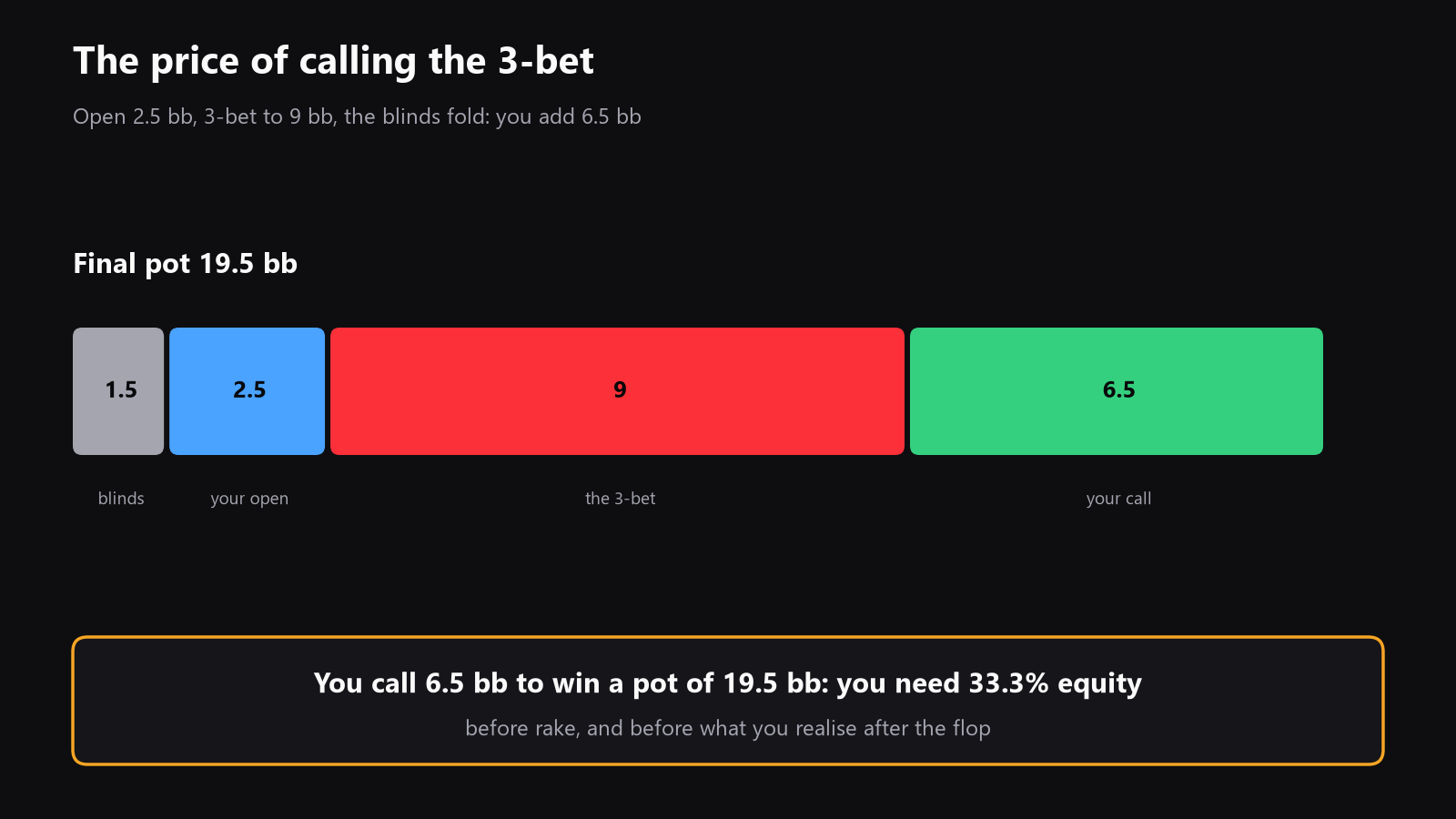
Typical calling hands include:
- pocket pairs, especially when stacks are deep enough to set-mine
- suited broadways, such as KQs, QJs, and JTs
- suited aces, especially in position
- hands that can make strong top pairs, strong draws, or nutted holdings
A hand does not need to be a monster to call. It needs to perform well enough against the 3-bettor's range, and it needs to do so in the seat and stack configuration you are actually playing.
Why suited hands often call well
Suited hands make flushes and strong draws more often. Connected hands make straights and combo draws more often. That extra playability matters because 3-bet pots do not end preflop. You are not buying a card, you are buying a whole hand.
Why some offsuit hands look better than they are
Hands like AJo or KQo can look strong because they are high-card hands. But if the 3-bettor has plenty of better aces, better kings, and strong broadways, those hands can be dominated often. When that happens, the hand looks playable preflop and disappointing postflop.
That is the classic trap: a hand that seems too strong to fold but not strong enough to continue comfortably.
When 4-betting is best
A 4-bet is usually one of two things:
- a value 4-bet
- a bluff 4-bet
4-bet for value
You 4-bet for value when your hand is strong enough to continue against worse hands and to build a bigger pot.
Common value 4-bets often include:
- QQ+
- AK
- sometimes JJ or AQ, depending on positions, stack depth, and pool tendencies
The wider the opponent's 3-betting range, the wider your value 4-betting range can be.
4-bet as a bluff
A bluff 4-bet should not be random aggression. It needs a reason.
The best bluff 4-bets usually have two qualities:
- they block some of the hands the opponent wants to continue with
- they do not play especially well as calls
That is why hands with an ace are often good bluff candidates in the right spot. They reduce the chance villain has premium hands, and they often do not realize equity well as flats.
But a bluff 4-bet only makes sense if the 3-bettor folds often enough and if your hand is not a strong call instead.
Stack depth changes everything
At 100 bb, many 4-bet decisions still leave room for postflop play.
At 40 bb to 60 bb, the pot grows quickly, and many marginal calls disappear.
At short stacks, especially in tournaments, the decision can get close to a shove-or-fold structure. Then the value of continuing changes fast because chipEV and ICM can pull in different directions.

When folding is best
Folding is not passive. It is correct when the spot does not justify continuing.
You should fold more often when:
- the 3-bettor is tight and value-heavy
- you are out of position
- your hand is dominated too often
- the rake is high
- stack depth does not give you enough room to play well after the flop
A fold is often the best play with hands that look reasonable at first glance but do not realize enough equity in practice.
This is where many players go wrong. They feel that folding to a 3-bet is giving up. In reality, continuing with the wrong hands is often the bigger leak.
How the 3-bettor's range changes the answer
This is the real key.
Against a tight 3-betting range, you should:
- fold more
- call less
- 4-bet mainly for value
Against a wide 3-betting range, you should:
- defend more
- call more hands that realize equity well
- add some 4-bet bluffs with the right blockers
The same player can also have different ranges in different positions.
For example:
- a blind versus button 3-bet can be much wider
- an under-the-gun versus middle-position 3-bet is usually much tighter
So do not ask only, “What hand do I have?” Ask, “What range is this player likely using from this exact spot?”
If you want to study that by pool and position, the Reveal module helps because it shows what players at your limits actually do from your own hands.
A practical checklist before you continue
Before you call, 4-bet, or fold, ask yourself these questions:
- Am I in position or out of position?
- How deep are the stacks?
- How big is the 3-bet relative to the open?
- Is the 3-bettor tight, loose, or aggressive?
- Does my hand realize equity well as a call?
- Does my hand make more money by applying pressure than by seeing a flop?
If most answers point toward position, playability, and a wide opponent range, continuing becomes more attractive.
If most answers point toward poor realization, domination, and a strong opposing range, folding is often best.
Common mistakes
1. Calling because the price looks cheap
A cheap price is not enough if your hand realizes poorly.
2. 4-betting hands that should just call
Not every decent hand wants to turn into a 4-bet bluff. Some hands are better as calls because they play well postflop.
3. Folding too often
If you overfold to 3-bets, good opponents can exploit that by attacking your opens too much.
4. Defending too wide out of position
This is one of the most expensive preflop leaks in poker. Out of position, many hands lose value fast.
5. Ignoring rake
At small stakes, rake can make thin calls much worse than they look.
A simple way to think about the spot
You can reduce the decision to this:
- Call when your hand has playability, your position is good, and the 3-bettor is wide enough.
- 4-bet when you have strong value or a bluff with blockers and fold equity.
- Fold when your hand is dominated, your realization is poor, or the price is not enough once position and rake are included.
That is the core of the preflop decision.
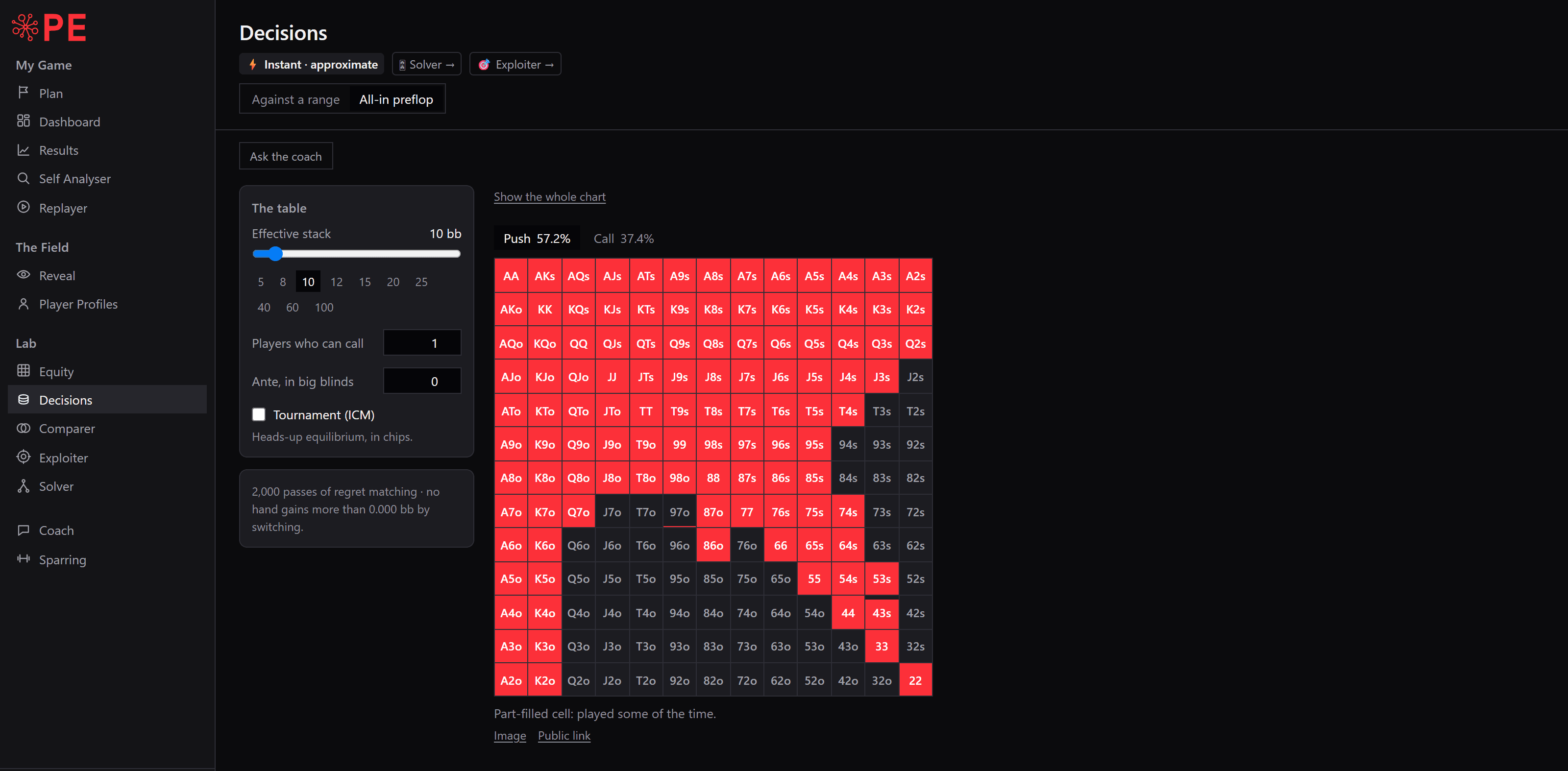
If you want a concrete answer for a concrete setup, the Solver module gives you the line for that spot. And if you want to know whether your pool really 3-bets that wide from a given position, the Reveal module gives you the evidence from your own hands. For short-stack spots, the Decisions module is the fastest way to check whether the decision has turned into a push-or-fold one.
The short version
If you remember only one thing, remember this:
Do not answer a 3-bet with your hand alone. Answer it with your hand, your position, the stack depth, the price, and the 3-bettor's range.
That is how you avoid overcalling, overfolding, and turning a preflop decision into a leak.
Do it on your own hands.