
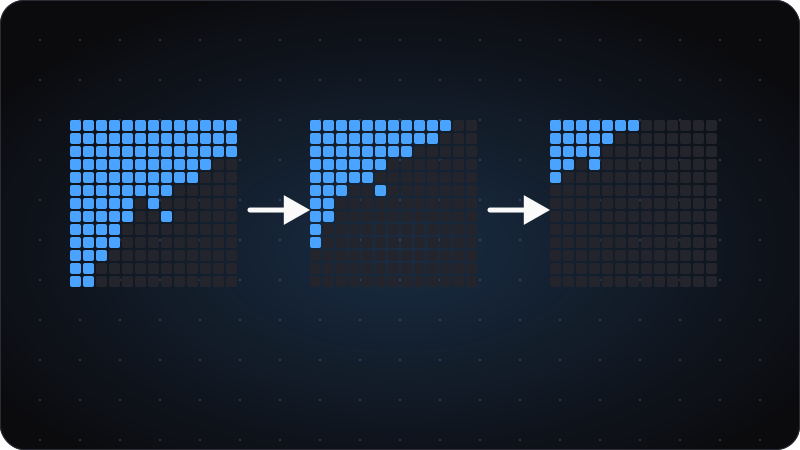
Poker hand reading is not about guessing the exact cards your opponent holds.
It is about shrinking their range, one street at a time, until only a small set of hands can still explain the line they took. If you do that well, the river becomes much easier. You stop asking, “What hand is this?” and start asking, “What value hands are here, what bluffs are here, and does this bet size make sense?”
That shift matters a lot. Most players do not lose because they never get a read. They lose because they stop too early, or because they read one action in isolation instead of the whole line.
1) Start with position, because position sets the first range
Before a card is dealt, position already tells you a lot.
An under the gun open is usually stronger than a button open. A cutoff open is wider than an UTG open. A big blind defend is different from a small blind defend. None of that is a read yet, but it is the first filter.
If you ignore position, you start from the wrong range.
A player who opens from early position usually arrives on later streets with fewer weak offsuit hands, fewer trash broadways, and more strong pairs, strong aces, and premium broadways. A player on the button can arrive with a much wider set of hands, including more suited hands, more connected hands, and more medium strength holdings.
Position also changes what betting means. In position, a player can use more small bets and more floats. Out of position, a check can be stronger, because the player does not have the option to act last on future streets.
2) Preflop action is the first real range filter
Once someone opens, calls, 3-bets, or 4-bets, the range changes immediately.
This is where many players think too loosely. They see a hand history and say, “He can have anything.” That is almost never true. The line already removed a huge number of hands.
A call usually removes the top of the range and the worst trash, but it keeps many playable hands. A 3-bet removes weak made hands and some speculative hands, while keeping value hands, strong blockers, and some bluff candidates. A 4-bet narrows things further, often toward premiums and a few blockers.
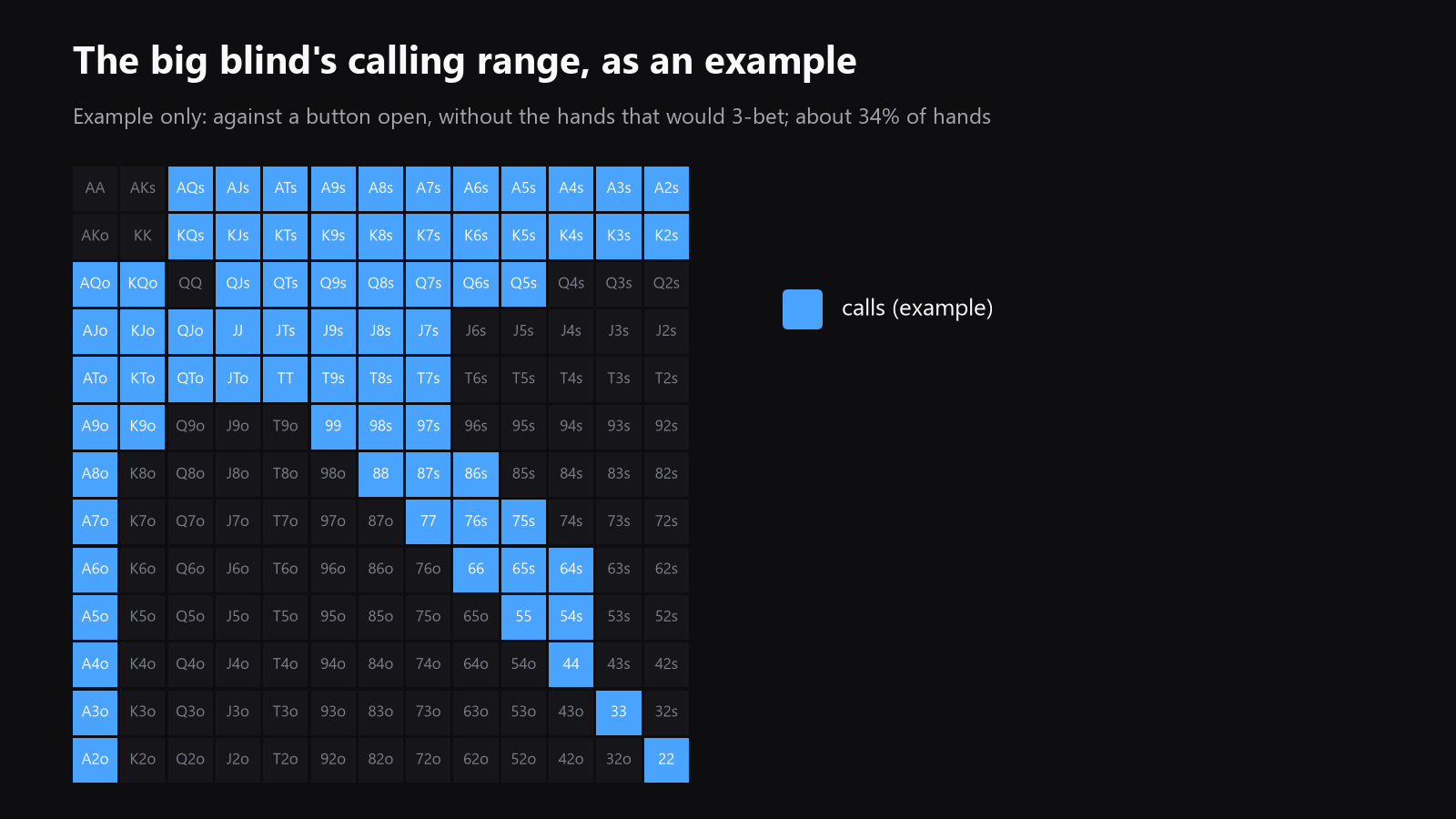
For example, if a player calls a raise from the big blind, that range is not the same as the range that would have 3-bet. It tends to contain more suited hands, more pocket pairs, and more hands that can continue postflop without being crushed by the opener’s strongest value hands.
That is why good hand reading starts before the flop is even seen.
3) On the flop, ask what the board does to each range
The flop is the first street where the board itself starts cutting hands away.
You are not just looking at what your opponent did. You are looking at how well that action fits the board.
On an ace-high board, the preflop raiser often has more top pairs and strong aces. On a low connected board, the caller often has more pairs, more two pair, and more straight draws. On a paired board, trips and full houses become possible, and some bluff lines get harder to maintain. On a monotone board, flushes and flush draws matter much more than on a rainbow board.
Then comes the size.
A small bet usually keeps a wider range alive. It can include thin value, some protection, and many hands that want to continue cheaply. A large bet is often more polar, meaning it puts more weight on strong value hands and stronger draws. That is not a law, but it is a useful starting point.
A check also matters. A check can mean weakness, but it can also mean pot control, traps, or a hand that does not need protection. You only know which is more likely when you combine position, preflop action, and board texture.
So on the flop, do not just say, “He bet.” Say, “What part of his range bets this board at this size?”
That question removes more hands than any single card alone.
4) The turn is where the range starts to polarize
The turn is often the most important street for narrowing range, because one more card usually makes the story more specific.
When a player barrels again, weak hands usually drop out. The range becomes more focused around hands that improved, hands that are still ahead, and bluffs that gained equity or picked up blockers.
This is why turn sizing matters so much.
A second small bet can still include medium strength hands and protection bets. A bigger turn bet often suggests more polarized construction, with stronger value and more bluffs. If the board changes in a way that favors the aggressor, that range can stay wide. If the turn card is bad for the aggressor, the betting range usually tightens.
Example: if the flop went bet, call, and the turn brings a card that completes obvious draws, then the turn bettor has to continue with more discipline. Some hands that were fine on the flop are no longer good enough to bet again for value. Some bluffs also disappear because their equity dropped.
This is one reason range reading is street by street. The turn is not just the flop plus one card. It is a new filter.
5) On the river, stop guessing the exact hand and count the combos
By the river, you should usually be thinking in ranges, not in single hands.
The river is where many players make their biggest mistake. They say, “He could have anything,” or, “He always has it,” and then they call or fold on a feeling. That is not hand reading. That is a guess.
Instead, do this:
- List the hands that could reach the river this way from preflop.
- Remove the hands that would have folded on the flop.
- Remove the hands that would have folded on the turn.
- Separate value hands from bluff hands.
- Use blockers and bet size to refine the estimate.
Now the river decision becomes practical.
If your opponent bets 75 into a pot of 100, you need 30 percent equity to call. That is pure poker arithmetic. Your hand does not need to be best all the time, only often enough.
If you think the river range is 42 value combos and 18 bluff combos, then bluffs are 30 percent of the betting range. If your hand beats the bluffs and loses to the value hands, that is right on the edge for a 75 into 100 call. If you block some bluffs, the call gets worse. If you block more value than bluffs, the call gets better.
That is the real job of river hand reading. Not naming the hand. Counting the range.
A useful shortcut is this:
- big river bet, usually more polar,
- small river bet, often more merged,
- missed draws become the main bluff source,
- blockers can move a close decision across the line.
6) A worked example of range narrowing
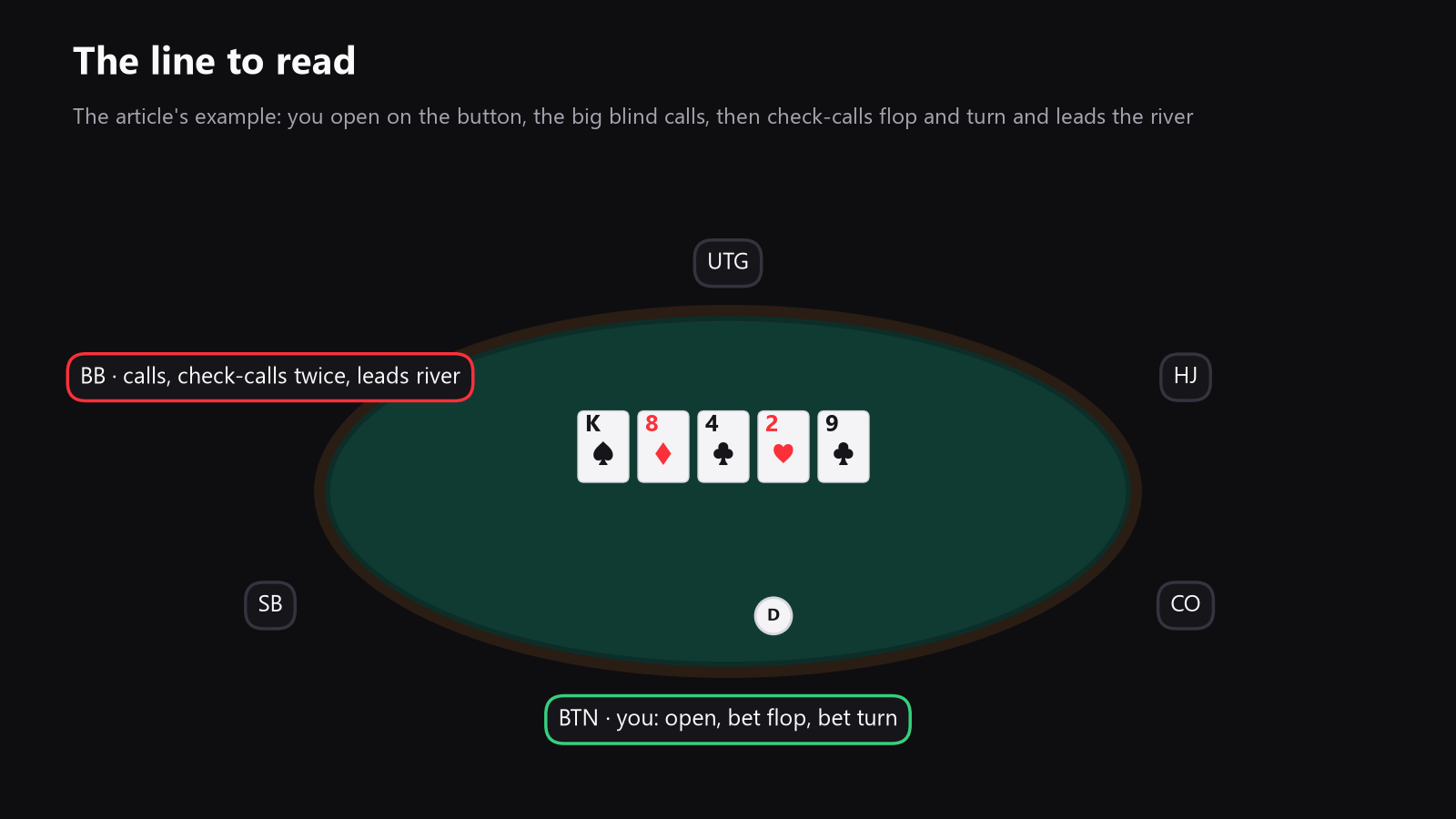
Suppose you are on the button and the big blind calls preflop.
Flop: K♠ 8♦ 4♣ Turn: 2♥ River: 9♣
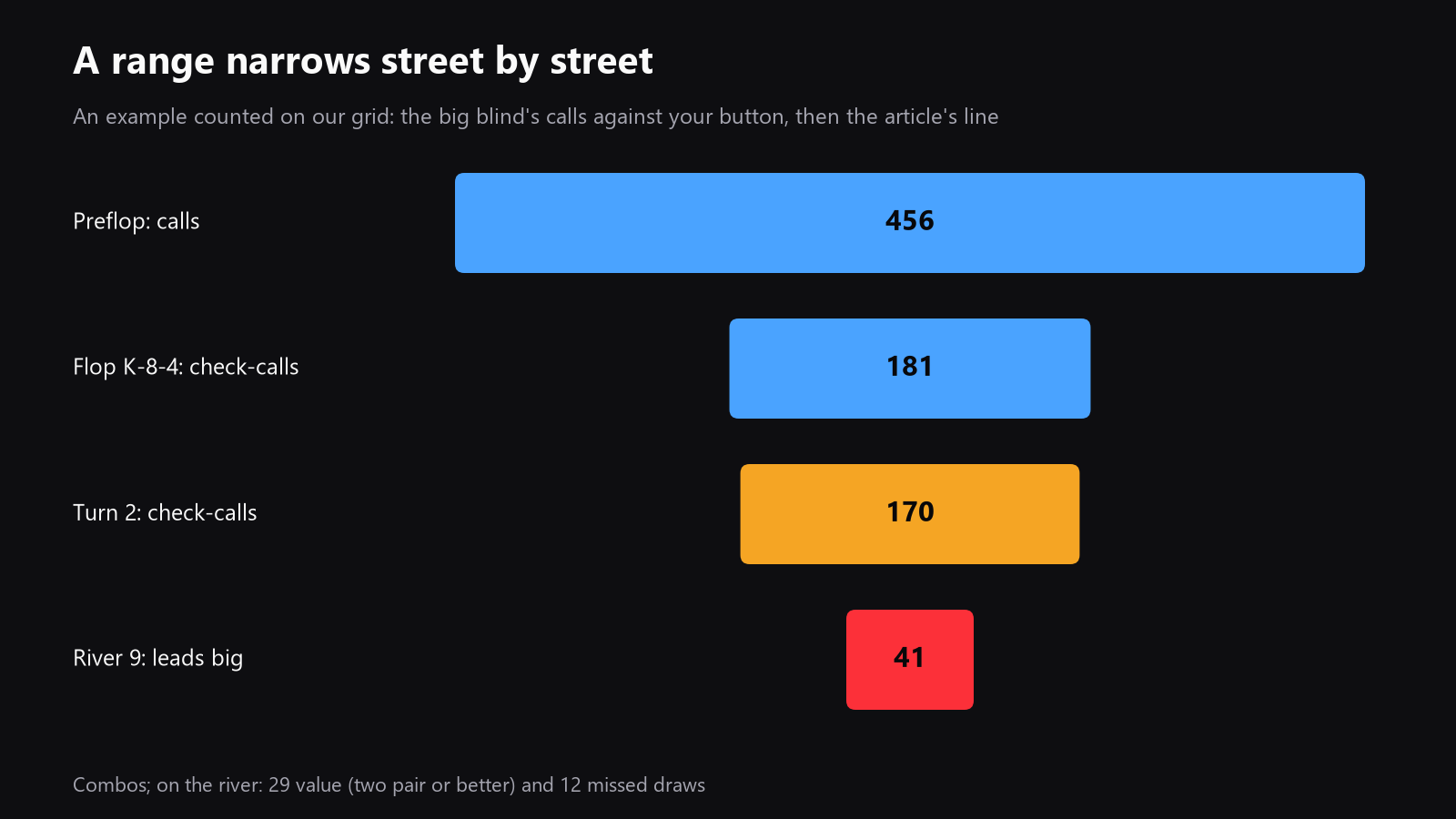
On the flop, the big blind can still have many pairs, some kings, some 8x, some 4x, pocket pairs, and some straight or backdoor draw combinations.
If the big blind check-calls a flop bet, many total misses are already gone. Weak overcards and random air hands are much less likely.
If the turn is a blank and the big blind check-calls again, the range gets tighter. Now you should give more weight to one pair hands, two pair, sets, strong draws, and hands that picked up extra equity.
If the river brings a card that changes very little and the big blind now leads big, the line becomes much more polarized. At that point, a lot of one pair hands are gone, and you should look hard at which value hands and which missed draws still make sense as bluff candidates.
That is what narrowing the range looks like in practice. Street by street, the list gets shorter.
7) A simple checklist you can use at the table
When you face a difficult river decision, ask yourself these questions:
- What is the preflop range from this position?
- What hands continue on the flop?
- What hands continue on the turn?
- What does this sizing usually mean on this board?
- Which value hands arrive here this way?
- Which missed draws can realistically bluff here?
- What do my own cards block?
If you go through those questions in order, you will read hands much better than if you jump straight to “he has top pair” or “he is bluffing.”
8) Common mistakes that make hand reading fail
A lot of range reading errors come from the same few habits.
The first is reading one street in isolation. A flop call does not mean the same thing as a flop call followed by a turn call.
The second is ignoring size. A small bet and a large bet do not represent the same range.
The third is thinking in exact hands too early. You do not need the exact hand. You need the remaining range.
The fourth is forgetting blockers. Your cards change how many combos remain for value and for bluffs.
The fifth is using your own line as if it were the same as villain’s line. Your range and their range are not symmetrical unless the action makes them so.
If you fix those five errors, your river decisions improve fast.
9) How to practice this away from the table
The fastest way to improve hand reading is to review hands street by street after the session.
Write down the range you think villain has on the flop, then on the turn, then on the river. Do not stop at the final street. The value is in watching the range shrink.
If you want a way to test your assumptions after the hand, the Reveal module shows what players at your limits actually do in the same kinds of spots, and the Self Analyser module helps you see where your own lines are too loose or too passive.
If you want to check a specific spot away from the table, the Solver module is there for that too. Use it off table, after the session, as a benchmark for a spot you studied. The point is not to copy a number blindly. The point is to see whether your range logic holds up.
10) The main idea to remember
Hand reading is not magic.
It is a sequence of filters.
Position filters the starting range. Preflop action filters it again. Each street removes hands that no longer fit the story. Bet size tells you whether the range is wide, merged, or polarized. By the river, you are not hunting for a single hand. You are comparing the remaining value range, the remaining bluff range, and the price you are being offered.
If you do that consistently, your river play becomes much cleaner, and your decisions become much less emotional.
That is the real skill.
Do it on your own hands.